
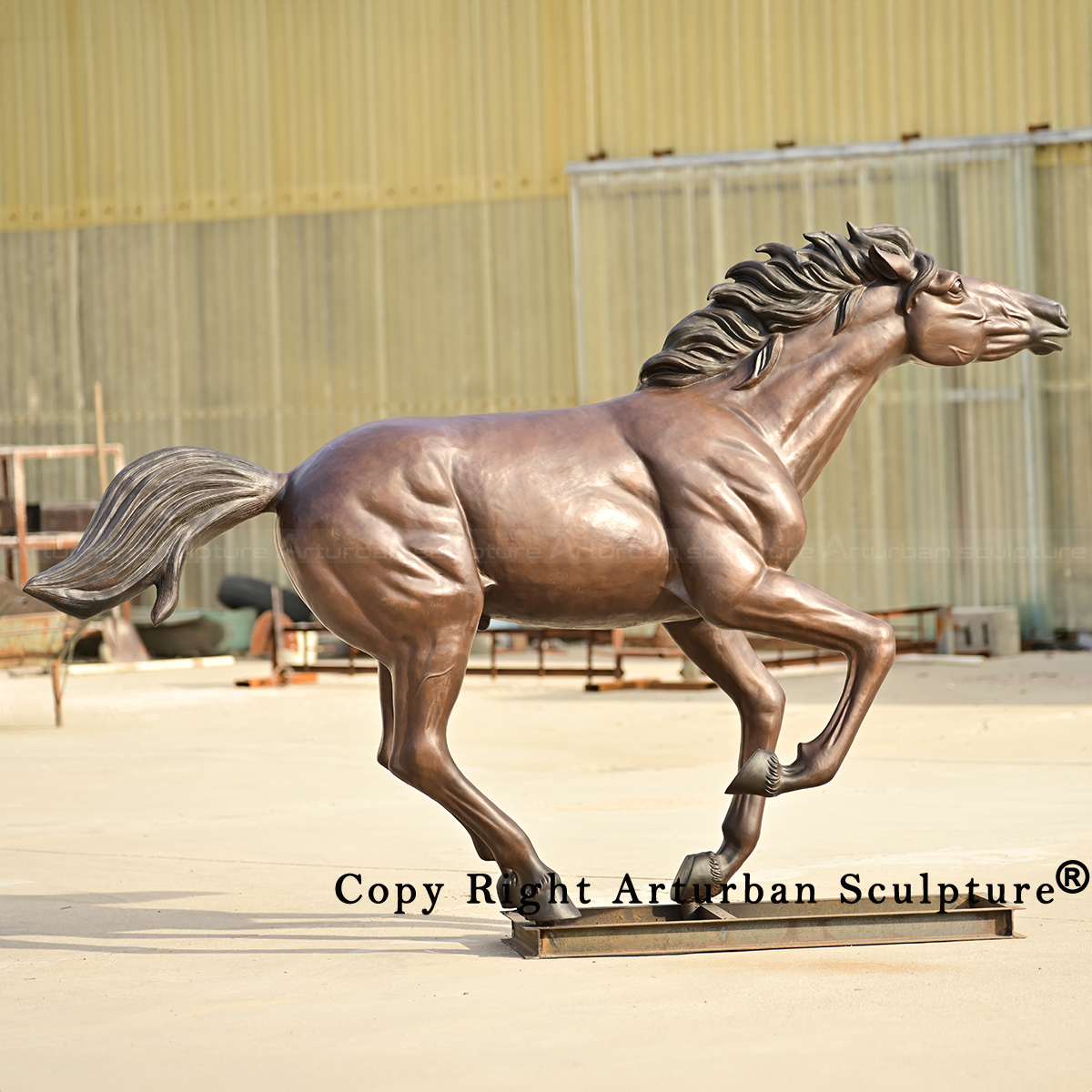
With its outstretched limbs, billowing mane, and forward-moving posture, the galloping horse embodies speed, power, and freedom, making it a classic theme in animal sculpture. This article will use a real Bronze Running Horse Statue as a case study to introduce the horse’s gait, symbolic meaning, advantages of bronze, manufacturing process, customization options, installation scenarios, and ordering process.
What Are the Four Main Horse Gaits?
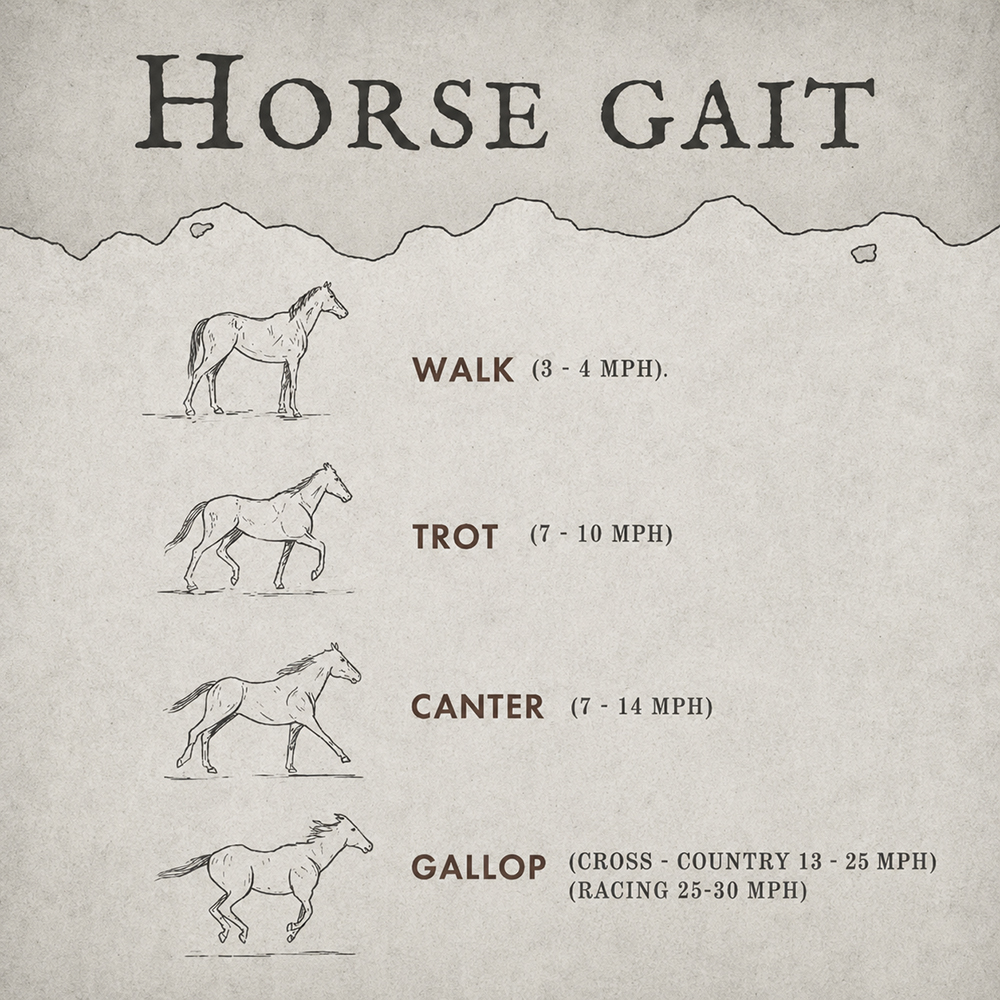
The four most common basic gaits for horses are walk, trot, canter, and gallop. Different gaits differ not only in speed but also in the order in which the limbs land, the undulation of the body, and the posture of the head and neck.
- The walk is a four-beat gait, with all four legs landing sequentially in a smooth motion, typically with two to three hooves in contact with the ground at any given time.
- The trot is a two-beat gait, with two diagonally opposite legs moving simultaneously in a clear rhythm, resulting in a regular up-and-down undulation of the body.
- The canter is a three-beat gait, faster than the trot but still offering a greater sense of control; it is commonly seen in everyday riding and equestrian training.
- The gallop is the fastest gait, with rapid, alternating extension of the limbs and a brief period of full-body airborne movement. Compared to the canter, the gallop has a longer stride, more pronounced body extension, and better reflects the power and propulsion of a horse at high speeds.
Why Is the Running Horse a Popular Sculpture Subject?
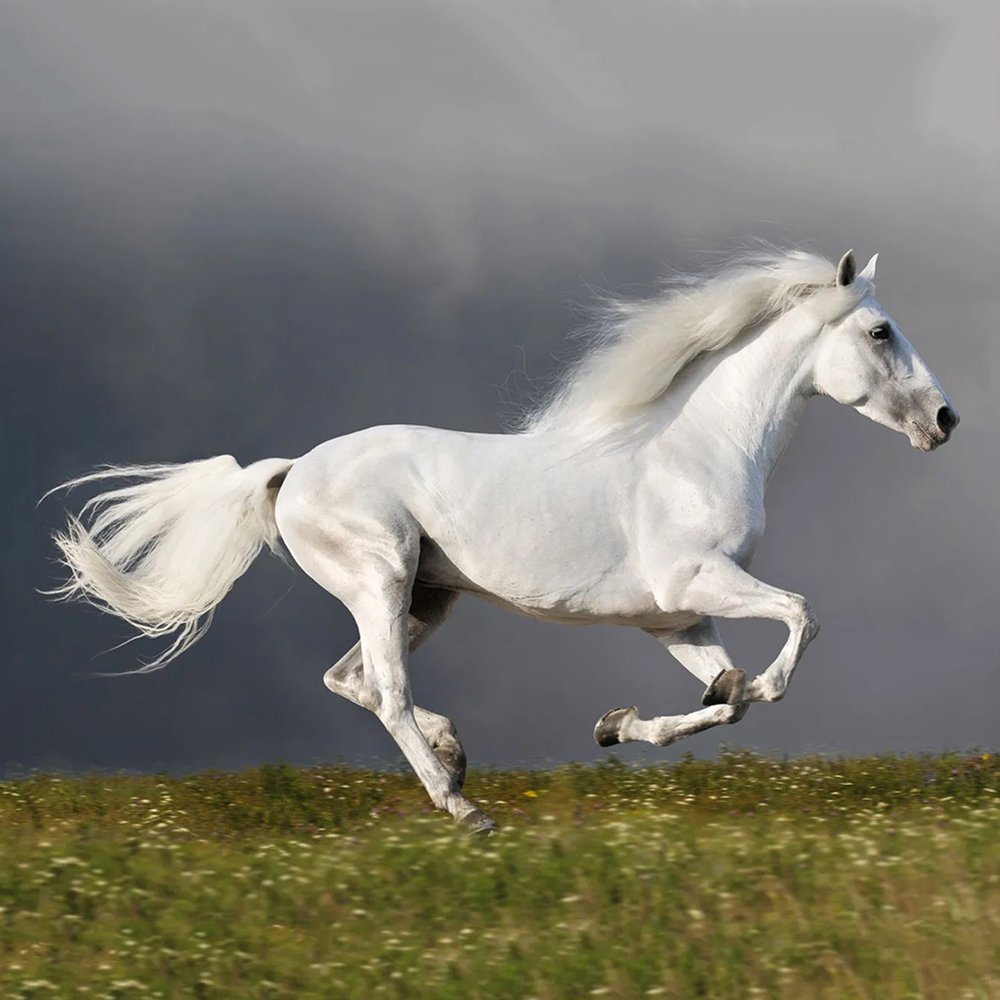
- Strong sense of dynamism: The outstretched head and neck, alternating limb movements, and the billowing mane and tail clearly express speed and power.
- Rich in form: The clearly defined muscle structure of the horse’s shoulders, chest, and hindquarters is suitable for realistic sculpting, as well as artistic exaggeration.
- Positive symbolism: Galloping horses often symbolize freedom, courage, endurance, ambition, and success; the forward-running posture also represents development and breakthroughs.
- Wide range of applications: Suitable for display at manor entrances, equestrian clubs, racetracks, hotel courtyards, corporate parks, and city squares.
A Real Bronze Running Horse Statue Factory Project
This project came from an overseas client who has a long-standing passion for equestrian art. She wished to commission two bronze galloping horse sculptures, each with a different pose but harmonious style, to fulfill a childhood dream of collecting them. We designed and produced the sculptures according to the client’s requirements for form, size, and overall effect, ensuring consistency in proportions, bronze color, and detail.
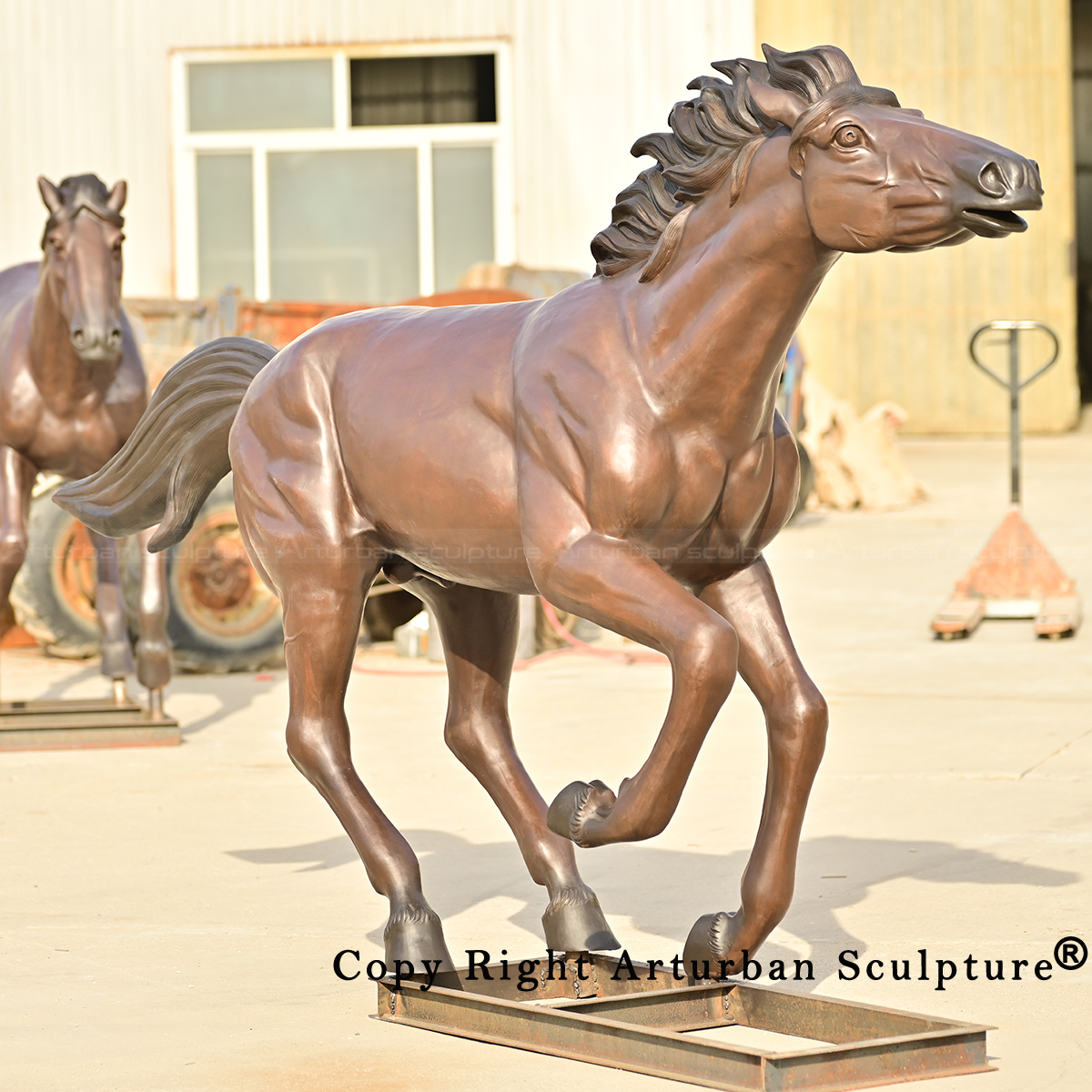
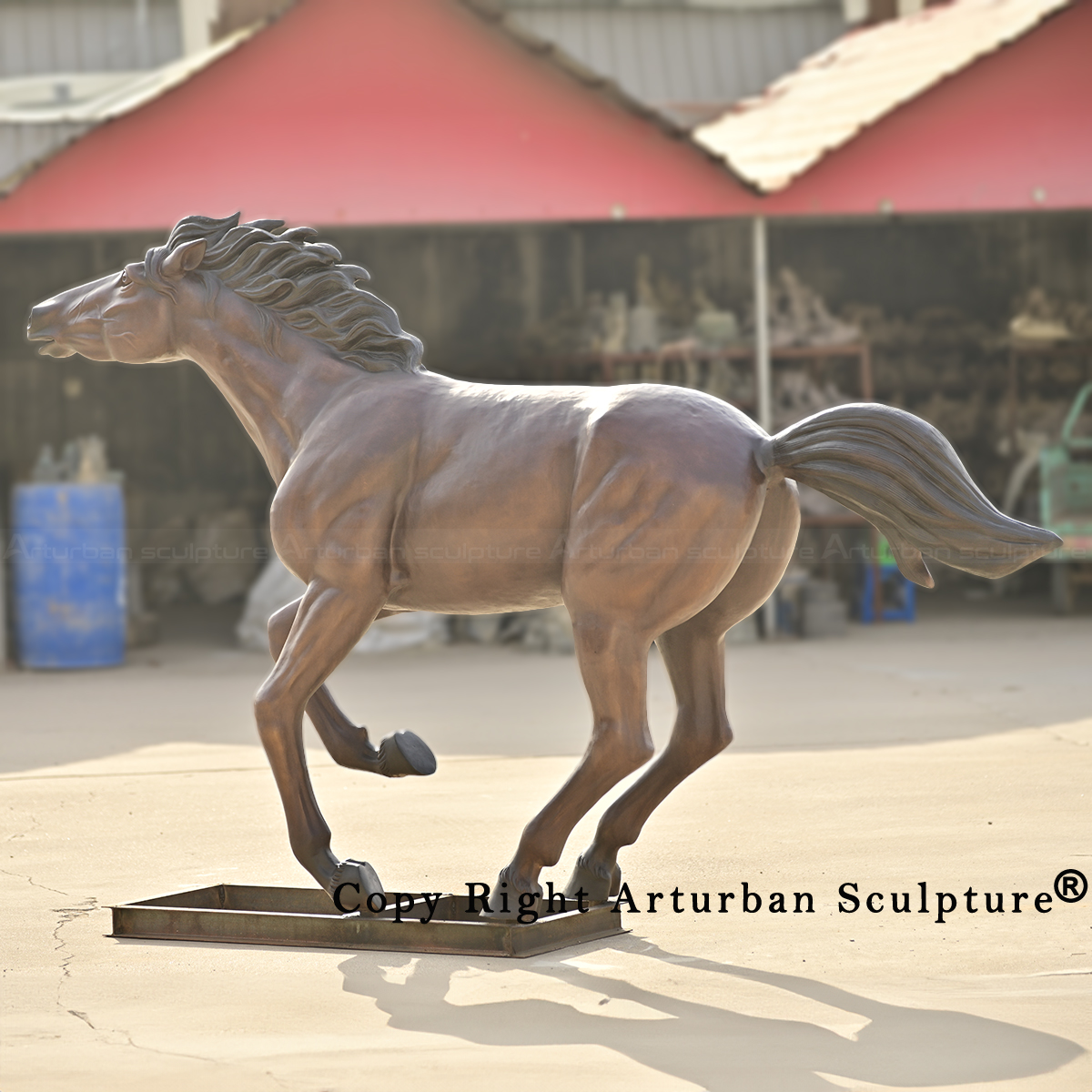
Appearance of this bronze running horse statue
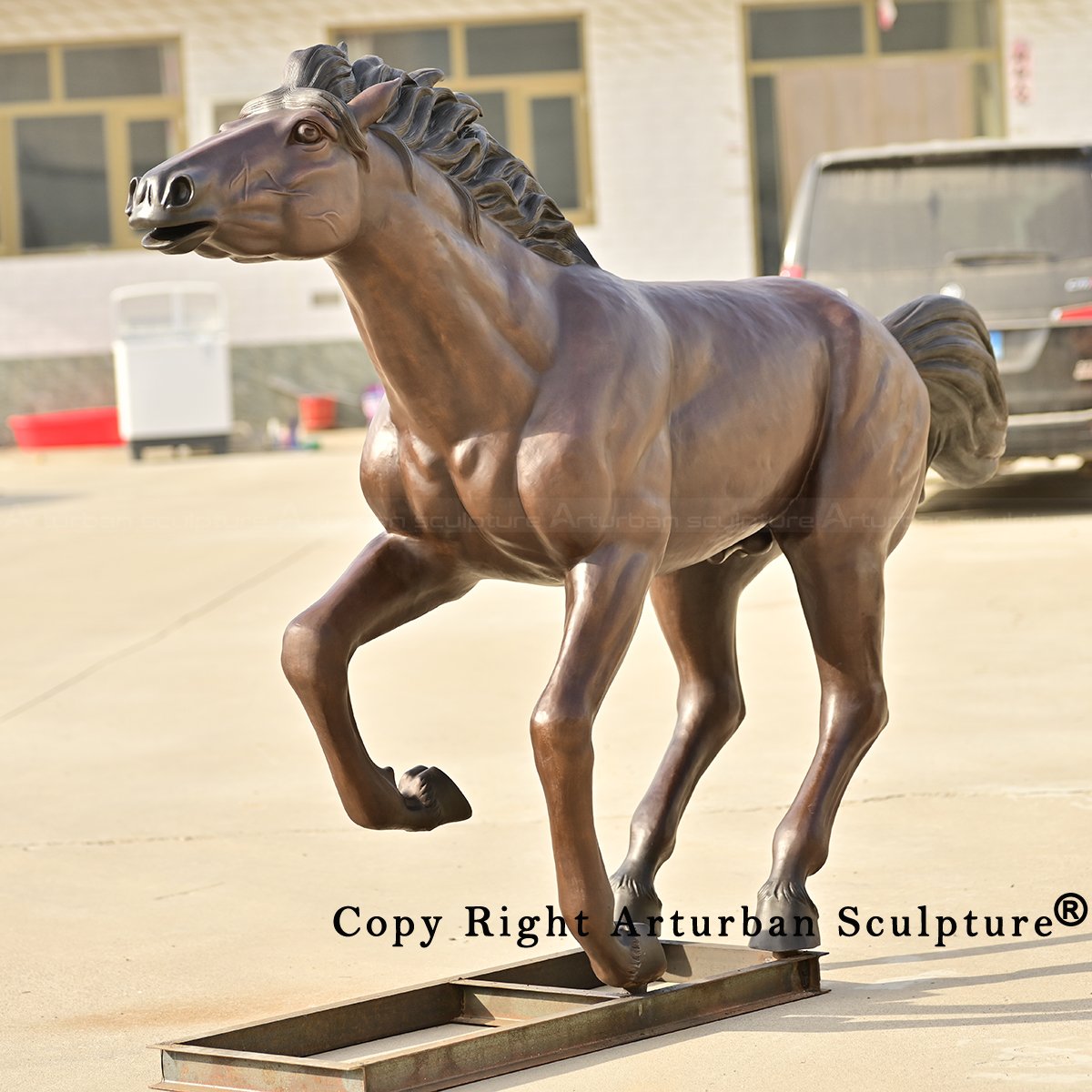
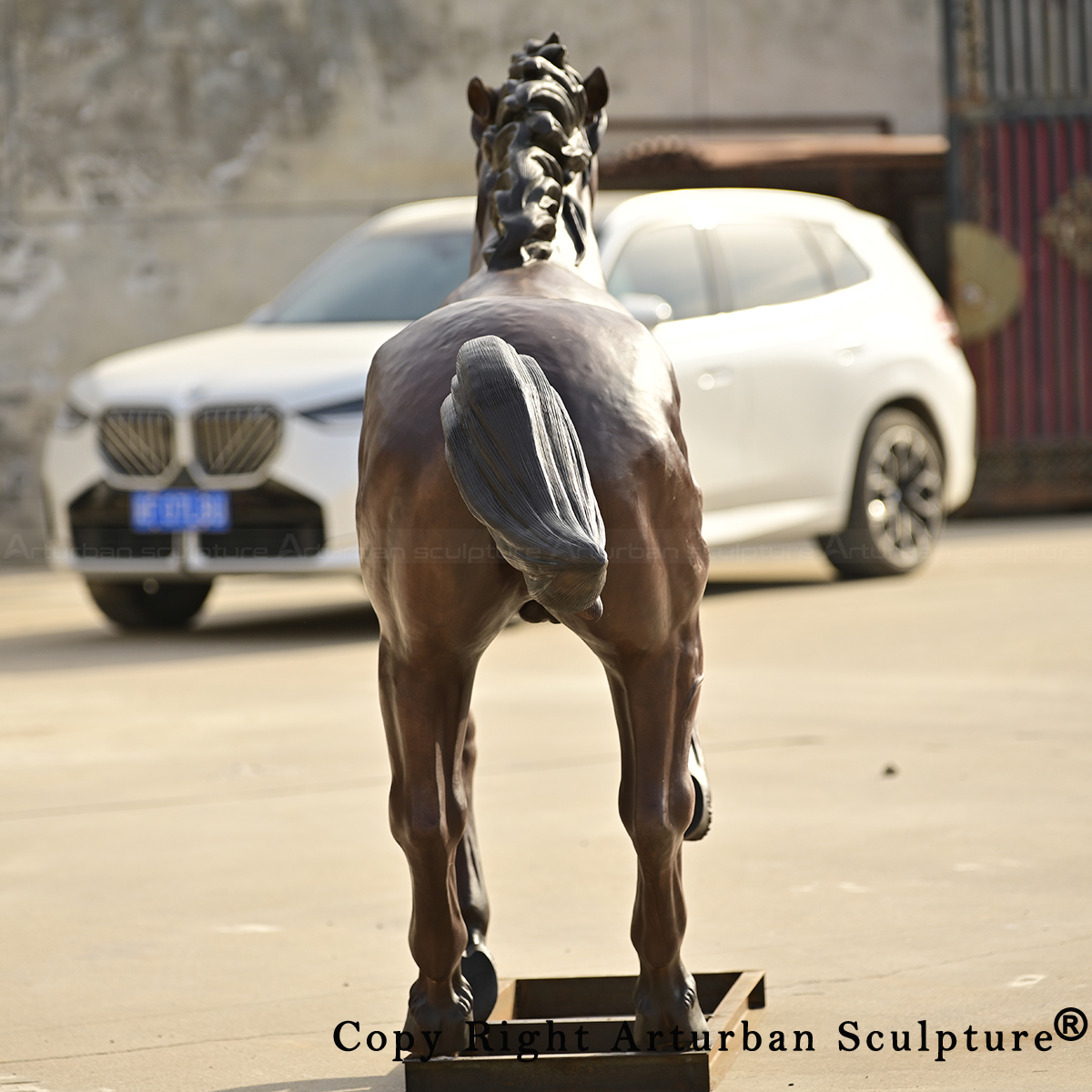
This sculpture is one of them, depicting a galloping adult stallion. The head in this bronze running horse statue is extended forward and slightly raised, ears erect, eyes wide open, and mouth slightly open, conveying an alert and excited expression during a run. The neck line transitions naturally to the chest and shoulders, the chest is broad, and the muscles of the shoulders, sides, and hindquarters are moderately enhanced, emphasizing the tension of the horse’s body as it exerts force. The limbs employ a combination of flexion and extension at different angles, creating a continuous forward momentum. The mane is sculpted into a layered, backward-curling shape, and the long tail extends backward, reinforcing the sense of speed. The tan bronze surface, paired with darker details on the mane, tail, and hooves, ensures a clear overall silhouette.
Customer Feedback After Delivery
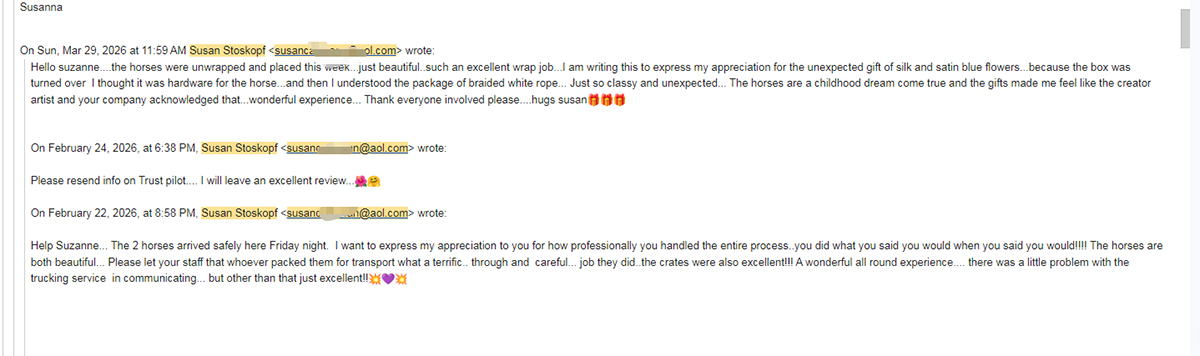
After the horse sculptures were safely delivered and unpacked, the client gave positive feedback on the finished product, packaging, and overall service. She stated that the sculptures were very beautiful, and she was satisfied with the professional project communication and transportation arrangements. The client specifically mentioned that this set of horse sculptures fulfilled a childhood dream of owning such a piece, and also appreciated the meticulous care shown in the packaging, securing materials, and accompanying gifts.
Why Bronze Was Chosen for This Running Horse Statue
- High Depth of Detail: Lost-wax casting in bronze allows for a highly accurate reproduction of the horse’s outstretched limbs, muscle definition, facial structure, mane, and tail texture.
- Structural Stability: The bronze casting, combined with an internal skeleton, leg reinforcement, and base connection structure, is ideal for creating large, dynamic horse sculptures with significant shifts in the center of gravity. The overall weight and solidity of the bronze sculpture enhance the sense of power.
- Suitable for Outdoor Use: After welding, finishing, patina treatment, and surface protection, it can be used long-term in estates, courtyards, equestrian clubs, and public landscapes.
- Rich Surface Finishes: Bronze can be finished with brown, dark brown, black, or green patina, further clarifying the horse’s muscle definition and dynamic contours.
- Suitable for Long-Term Projects: With proper installation and regular maintenance, bronze sculptures can maintain their shape for a long time, making them suitable for permanent landscaping.
In addition to bronze, we can also customize fiberglass, marble, or stainless steel versions based on project budget, installation environment, and design style.
How We Made This Bronze Running Horse Statue
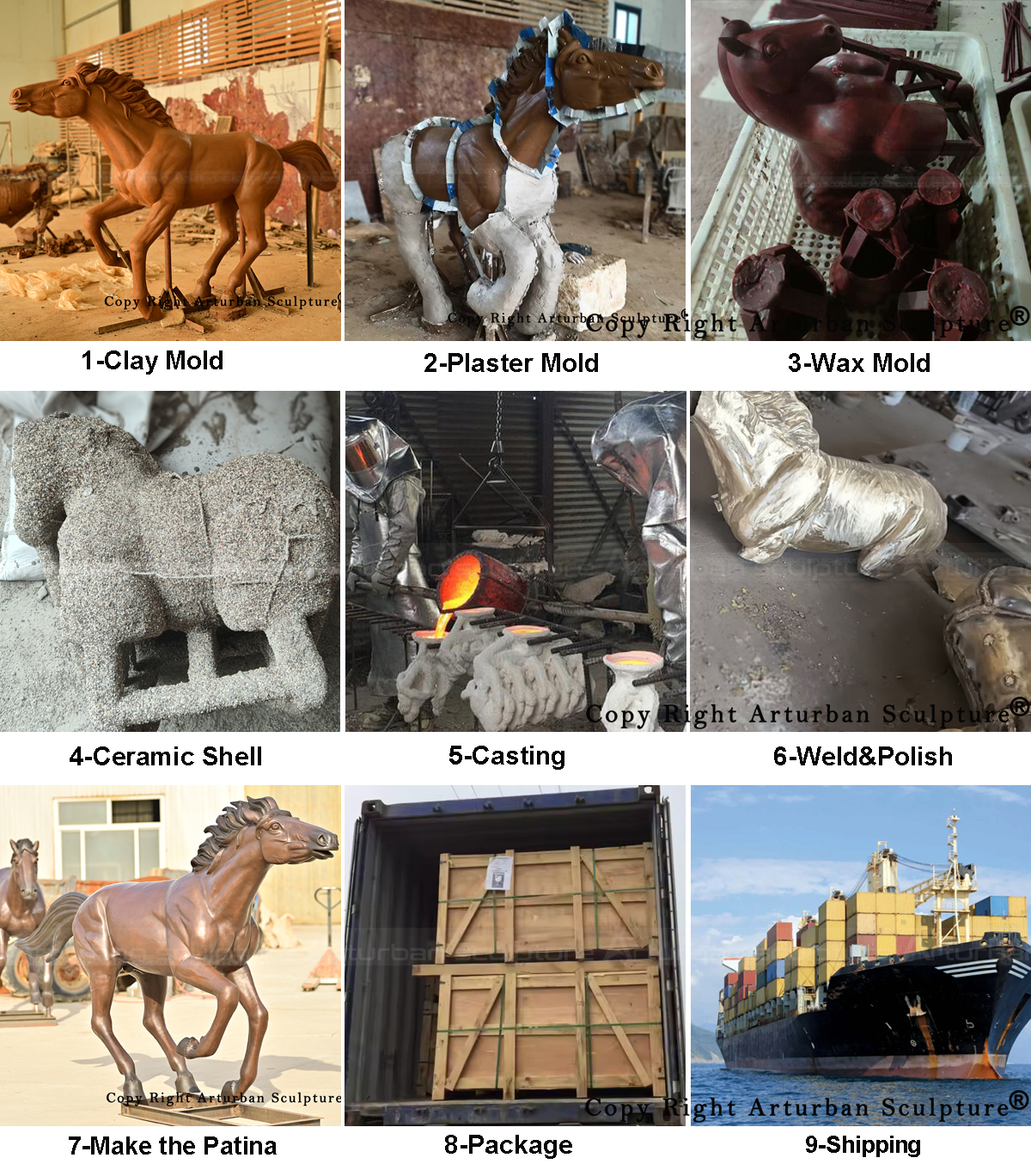
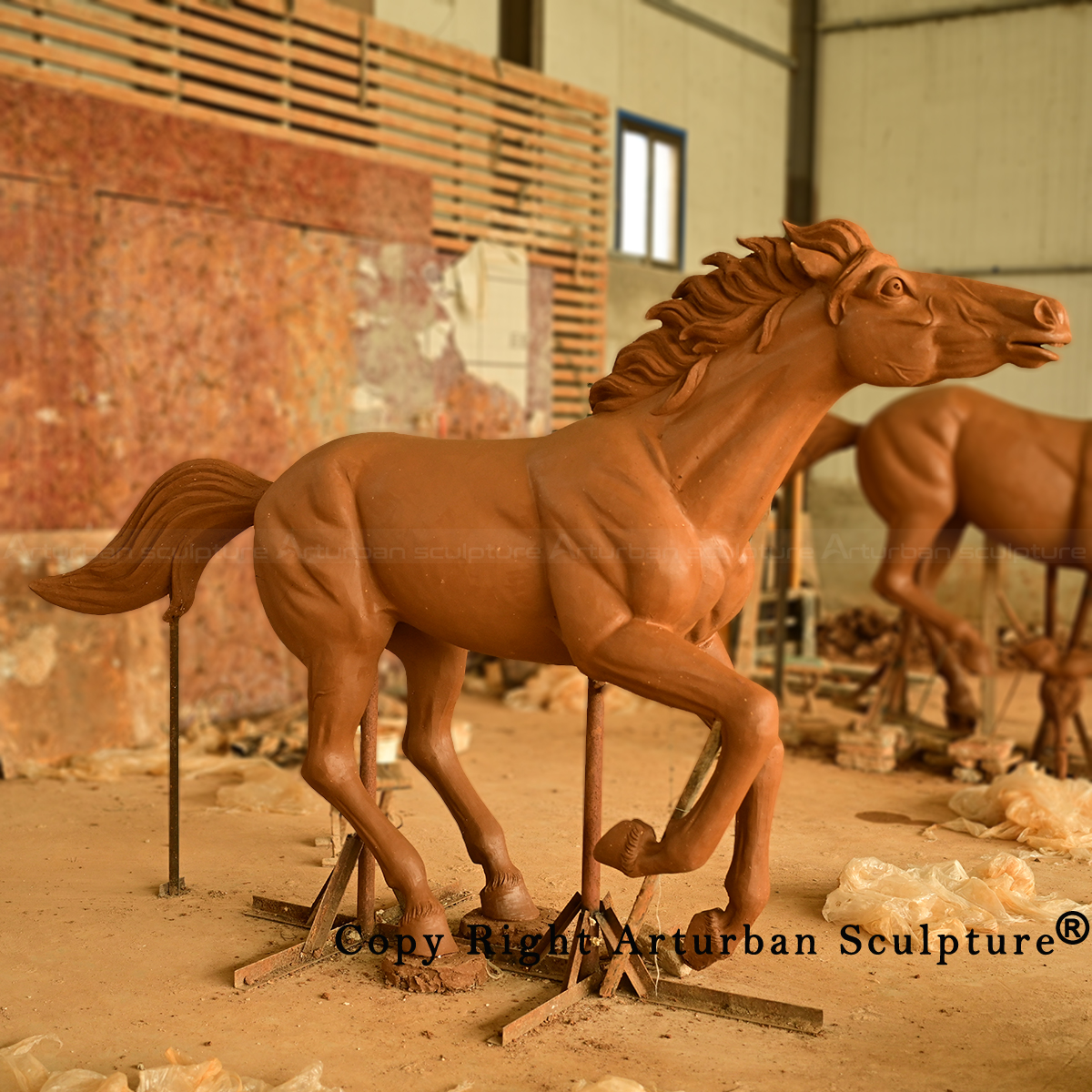
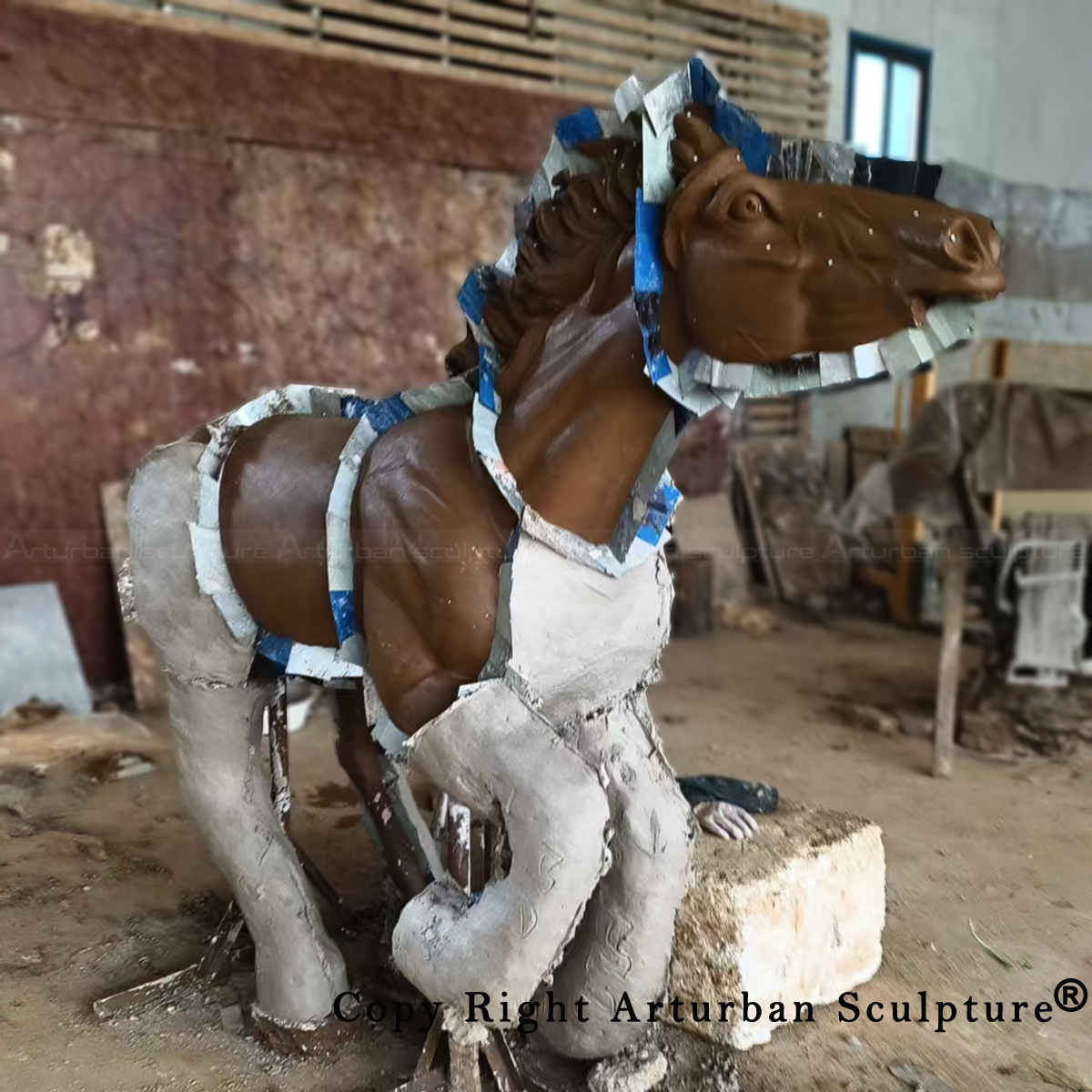
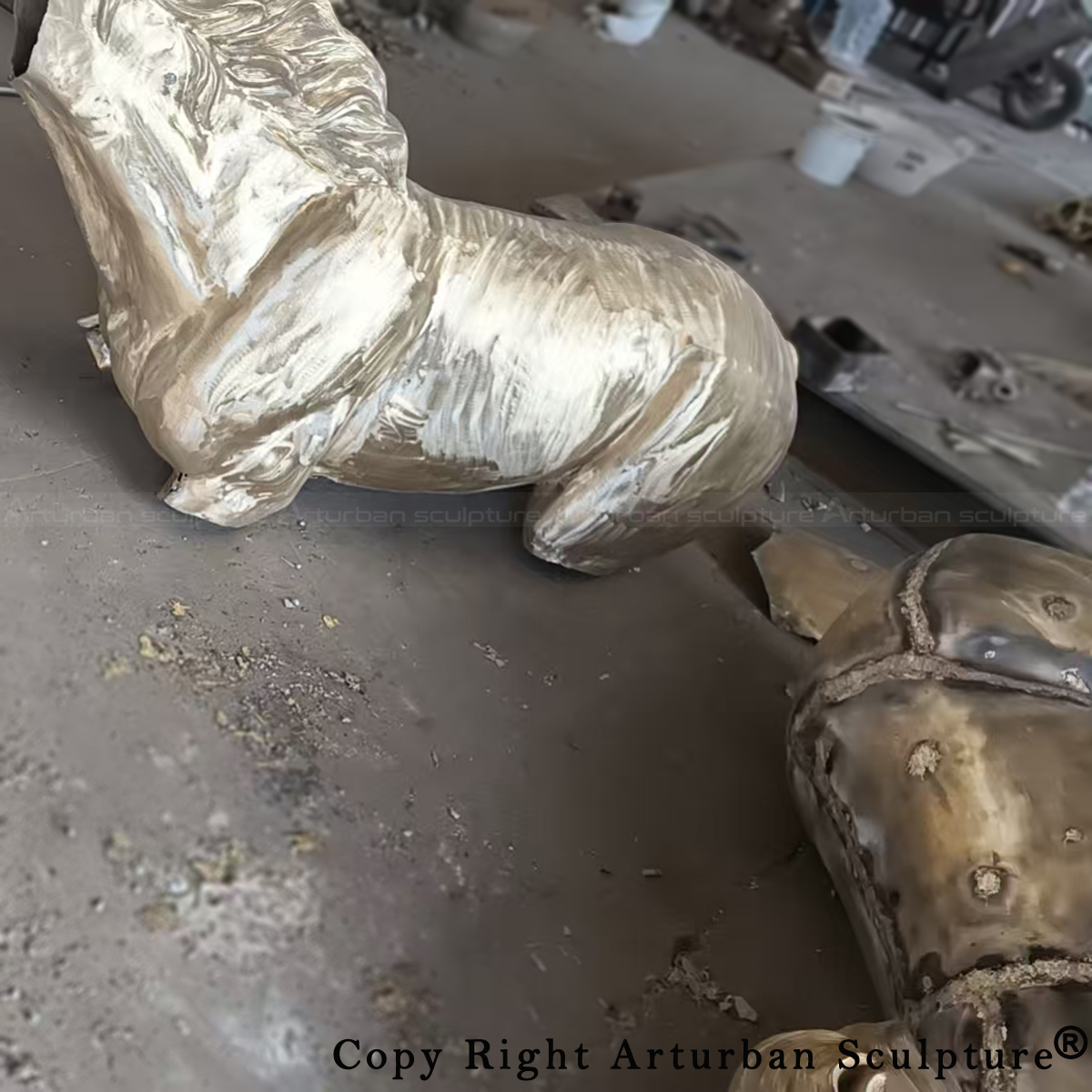
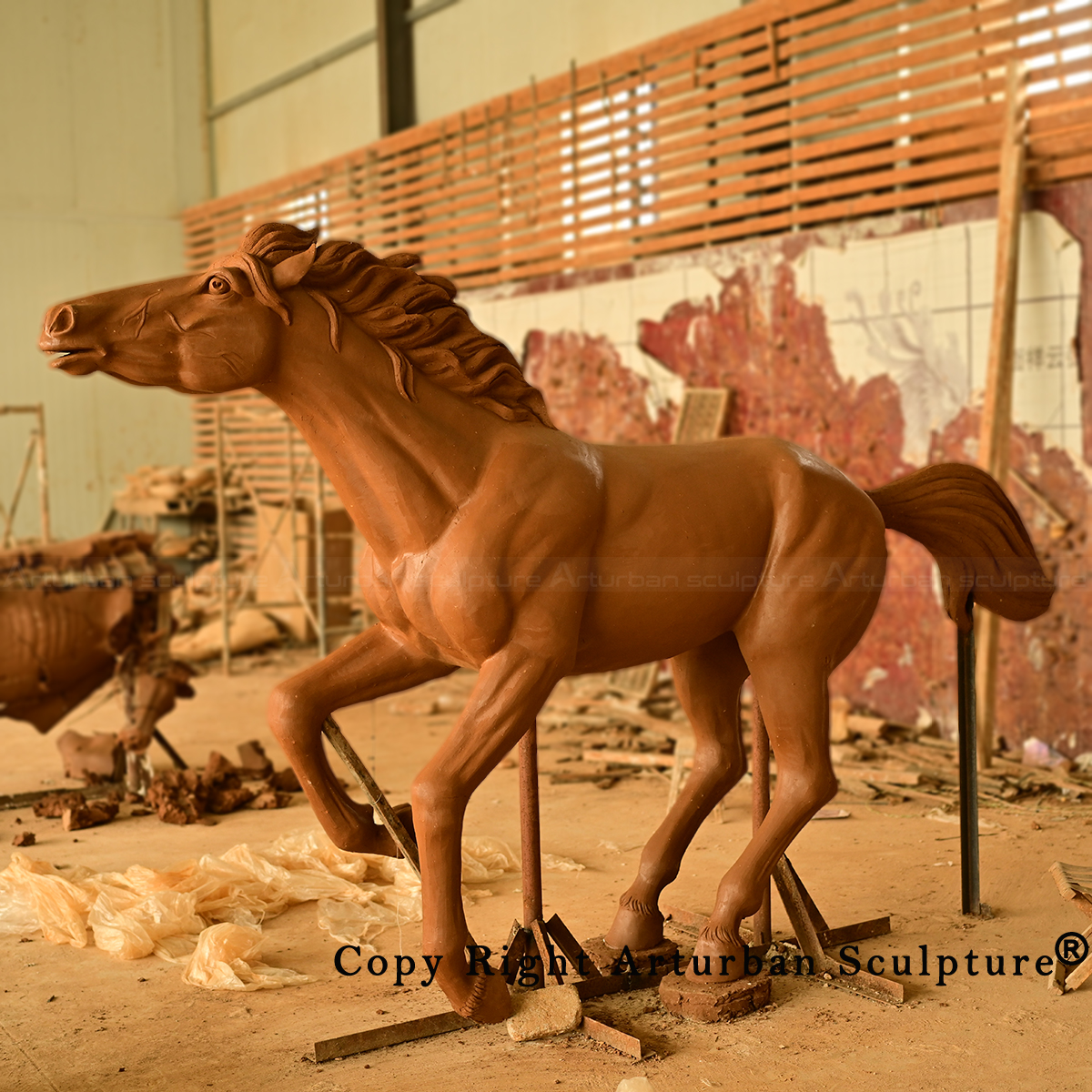
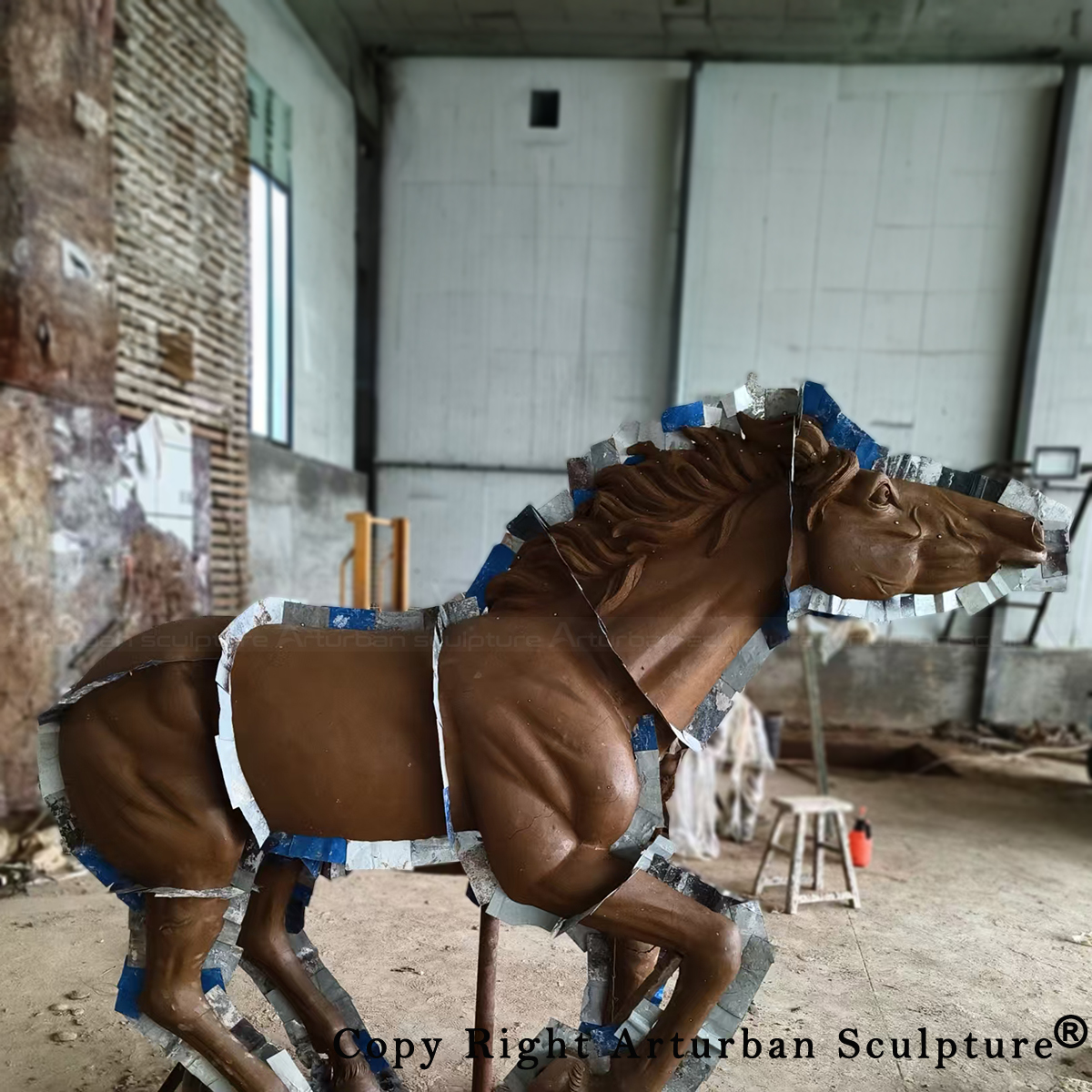
This bronze galloping horse sculpture was first created by our clay sculptors using a life-size clay model, with repeated adjustments made to the horse’s posture, muscles, and mane details. After the clay model was approved, it was molded into sections and wax models were made before the bronze parts were cast using the lost-wax casting method. Each bronze casting part underwent welding assembly, internal reinforcement, polishing and finishing, and texture restoration. Finally, the bronze was colored, protected, inspected for quality, and packaged.
Where Can a Bronze Galloping Horse Sculpture Be Installed?
- Estates and private courtyards: Suitable for entrances, lawn centers, driveways, or in front of buildings.
- Equestrian clubs and racetracks: The image of galloping horses perfectly complements the venue’s theme and can be used for entrance signage, competition areas, or members’ activity spaces.
- Hotels and commercial projects: Can be installed in hotel courtyards, resorts, commercial plazas, or corporate parks.
- Urban parks and public squares: A Bronze Running Horse Statue is suitable for open areas as large-scale animal-themed landscapes or public art installations.
- Farms and ranches entrances: Can be customized based on the actual horse breeds, brand logos, and site dimensions.
Customization Options for Horse Statues
- Custom Size: Small, near-life-size, or large horse sculptures can be created to fit the actual scale of courtyards, estates, commercial spaces, or public landscapes.
- Custom Posture: Head direction, limb movements, center of gravity, mane, and tail style can all be adjusted. Standing, running, leaping, or looking back postures can also be designed.
- Custom Breed Characteristics: Realistic sculpting can be based on the head proportions, body shape, and mane characteristics of different horse breeds such as Arabian, Thoroughbred, Friesian, and Quarterback. Artistic treatments can also be applied to muscles, lines, posture, and mane to present modern, abstract, or decorative styles.
- Custom Materials: In addition to copper, fiberglass, marble, or stainless steel can be selected based on budget, installation environment, and design style.
- Custom Surface Finishes: Surface finishes can be customized according to material and design requirements, such as copper patina, antique finish, painted finish, mirror finish, brushed finish, spray paint, metallic finish, and polished finish.
- Base and installation customization: Bottom connectors, embedded structures and installation methods can be designed according to lawns, stone bases, concrete floors or building entrances.
How to Order a Custom Running Horse Sculpture
- Design Idea Submission: Clients can provide clear drawings, reference images, or initial concepts. Even if the idea is incomplete, it can be discussed with us.
- Design Refinement: Our professional design team will further confirm the horse’s posture, size, materials, surface finish, and installation method based on the client’s needs.
- Final Design Confirmation: Depending on the client’s requirements, a 3D model, clay sculpture, or other model will be created for review and confirmation of the shape, proportions, and details.
- Production: After design confirmation, the factory will begin model making, mold casting, casting, or other appropriate production processes.
- Inspection and Delivery: Progress photos or videos can be provided during production. After completion, the finished horse statue undergoes quality inspection, packaging, and shipping.
Frequently Asked Questions About Running Horse Sculptures
- Can a running horse sculpture be customized in size?
Yes. We can create small, near-life-size, or large running horse sculptures to suit the proportions of courtyards, manor entrances, equestrian clubs, or public landscapes.
- Can you create a sculpture based on a real horse?
Yes. Clients can provide photos, videos, or dimensions from different angles, and our design team will refine the design based on the horse’s head proportions, body shape, mane, and distinctive features.
- Can the running pose be changed?
Yes. The horse’s head direction, limb movements, center of gravity, mane, and tail can all be adjusted. We can also design poses such as galloping, leaping, looking back, or multiple horses in combination.
- What materials are available besides bronze?
Besides bronze, we also offer fiberglass, marble, and stainless steel, depending on your budget, the environment, and design style.
- Is a bronze running horse sculpture suitable for outdoor display?
Yes. With proper internal structure, welded reinforcement, surface coloring, and protective treatment, bronze sculptures can be used in courtyards, manors, plazas, and other outdoor spaces.
- How is a large running horse sculpture secured?
It is typically fixed to a concrete foundation via an internal skeleton, supporting leg connectors, embedded steel plates, and anchor bolts. The specific method depends on the sculpture’s material, size, and installation site.
- Can the surface finish be customized?
Yes. Surface treatments can be customized based on material and design requirements, including patina, antique finish, painting, mirror finish, brushed finish, spray paint, metallic finish, and polishing.
- What information is needed before customization?
We recommend providing reference images, design ideas, target dimensions, material, quantity, installation location, and estimated lead time. Even if your ideas are somewhat vague, our design team can assist in refining them.
- Will you provide a model for approval before production?
Yes. We will create a 3D model, clay sculpture, or other form of model based on the client’s needs and project characteristics for the client to confirm the overall shape, proportions, and details. Production will only begin after the design is approved.
- Can customers receive production updates?
Yes. We can provide photos or videos at each stage of model making, casting, welding, coloring, and packaging to help customers understand the production progress.