
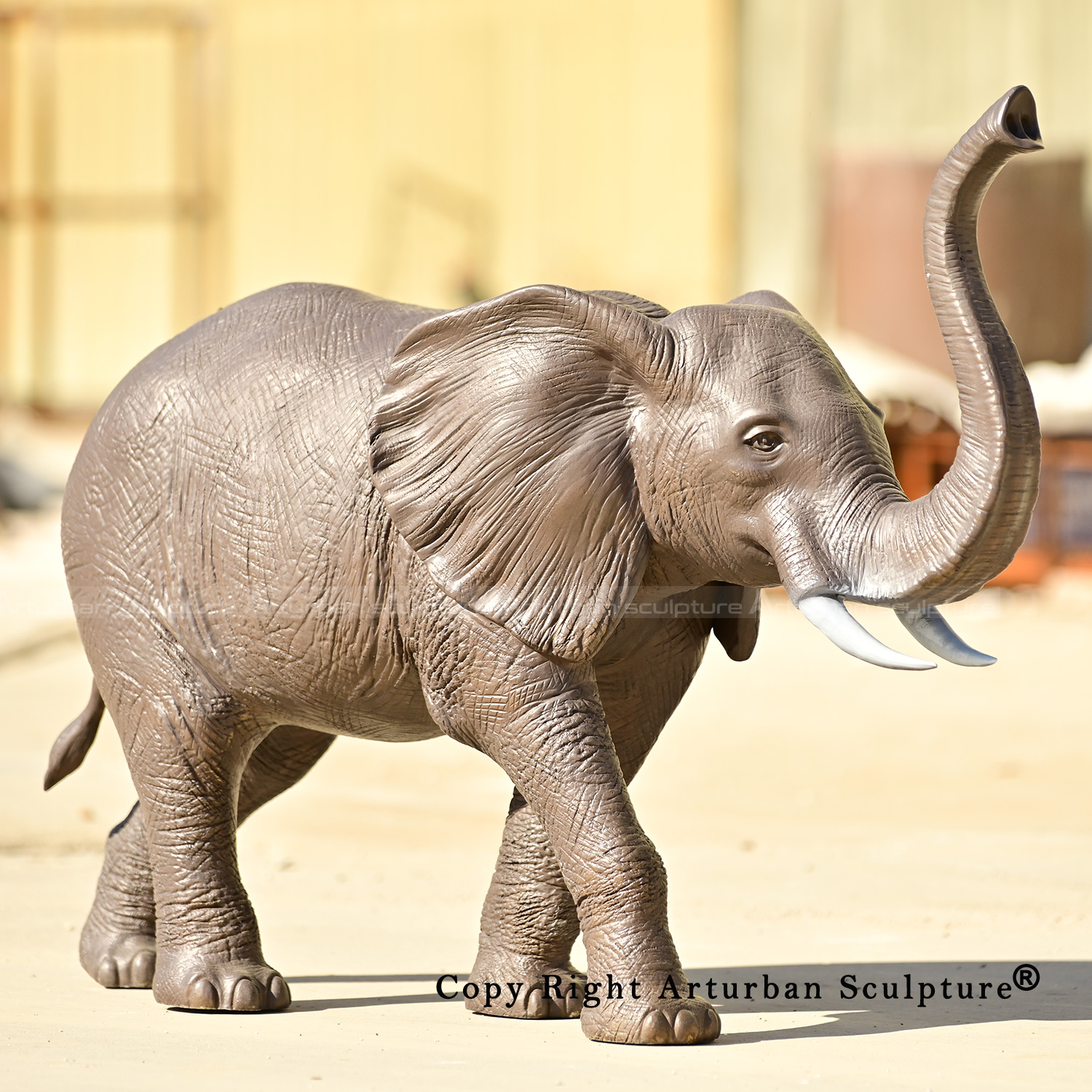
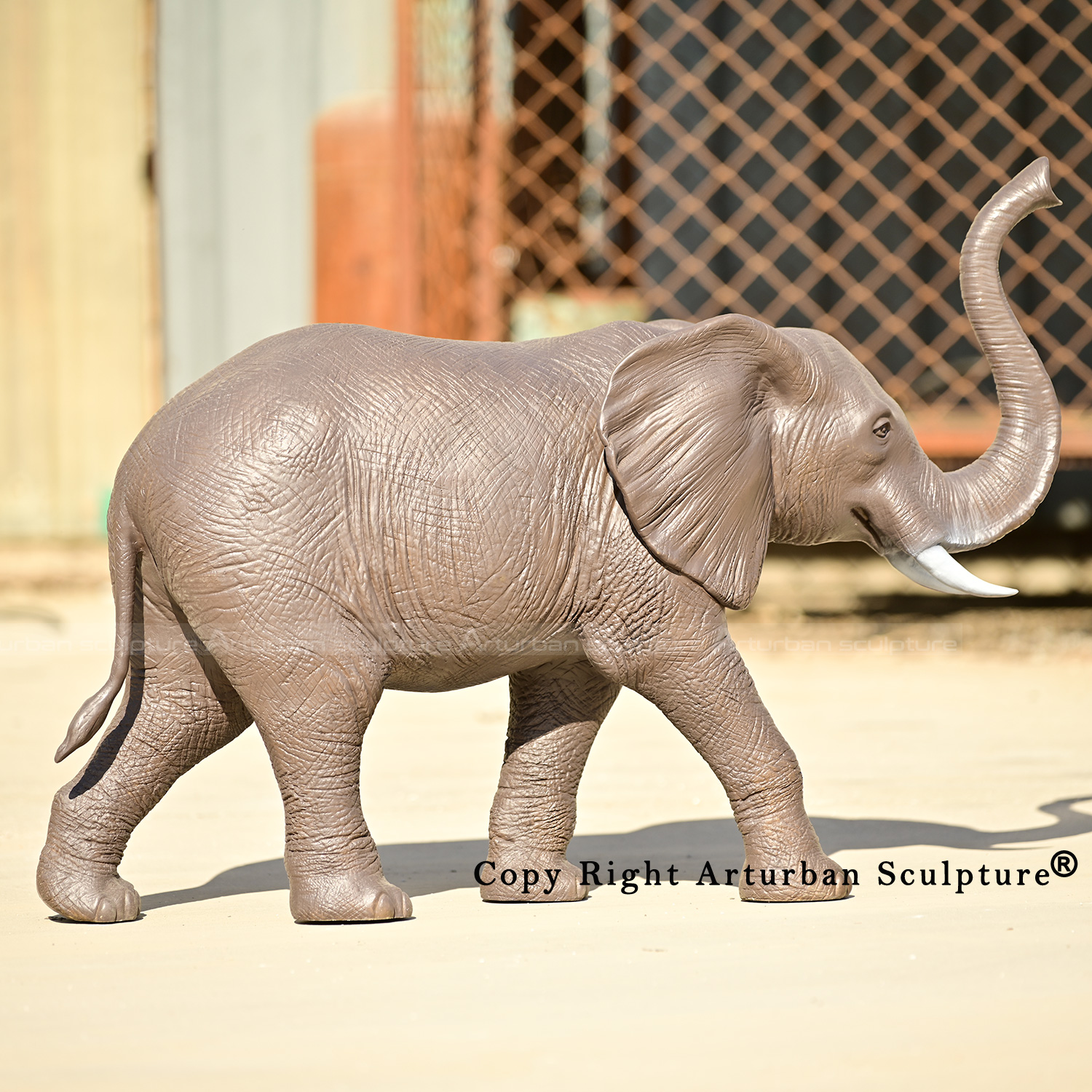
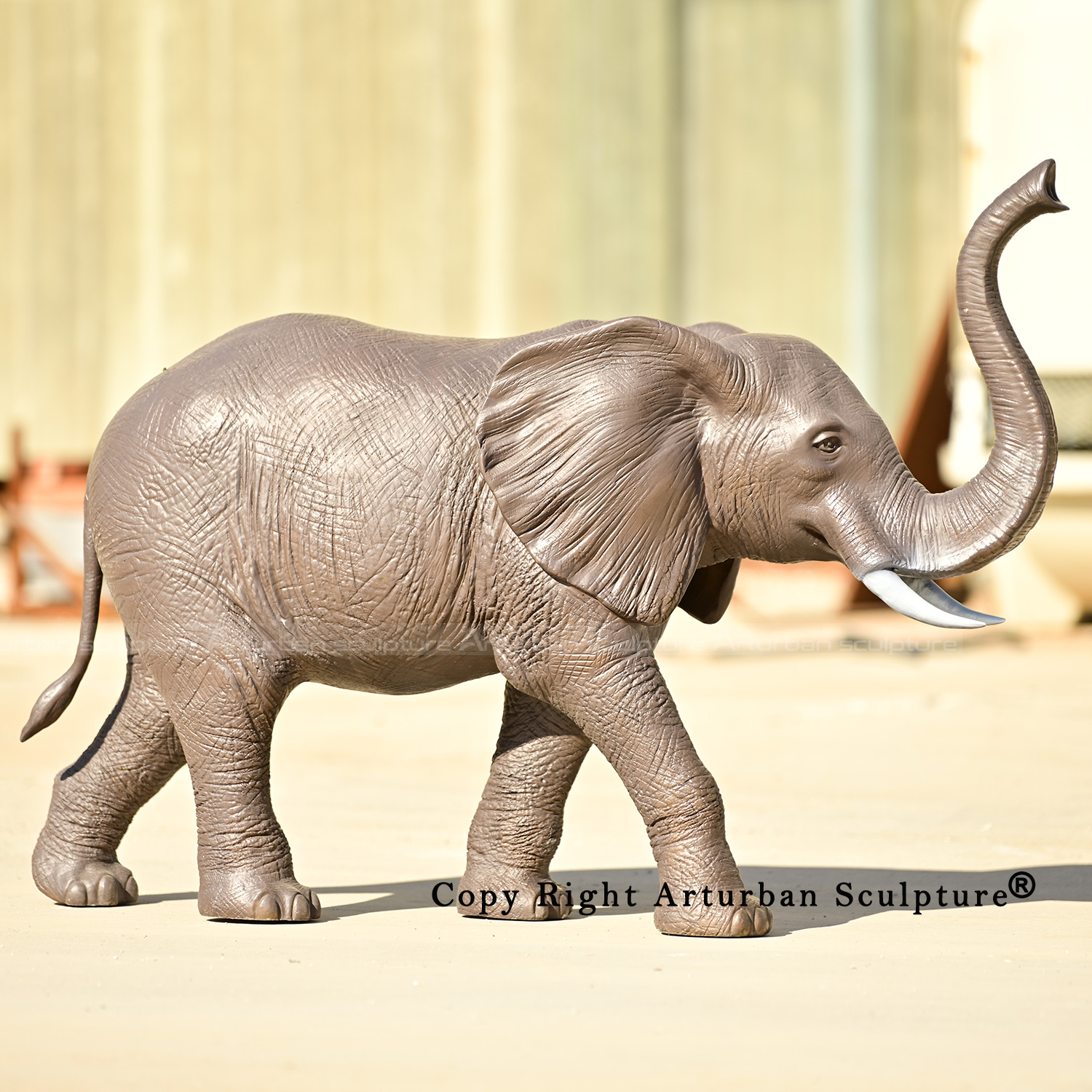
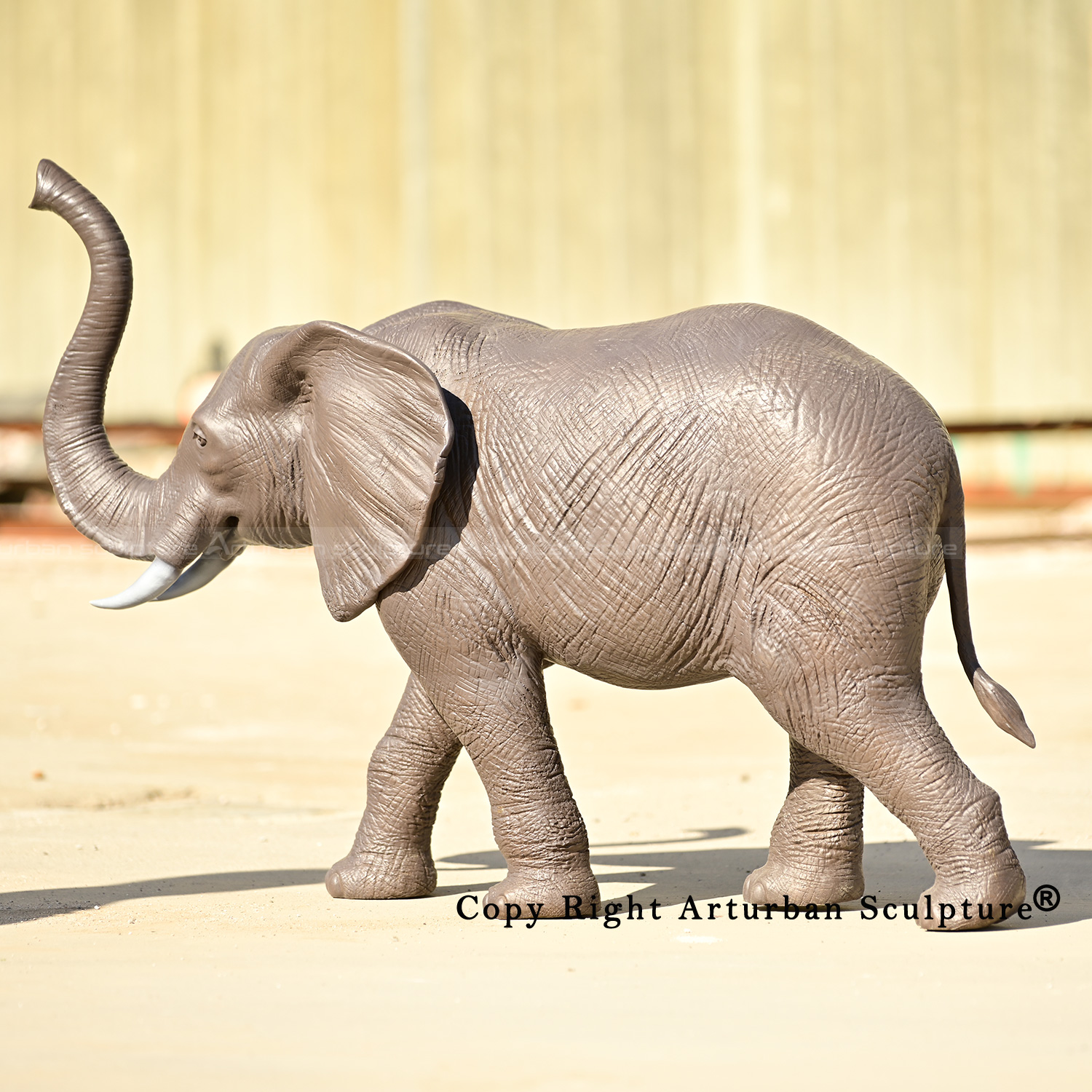
The image of an elephant with its trunk pointing upwards is often associated with positivity, welcome, and strength, and this bronze elephant sculpture is a custom-made piece based on this classic posture. The elephant with trunk up statue is modeled after an adult African elephant, meticulously depicting its large ears, curved tusks, robust limbs, and natural skin texture. Through a professional design team and bronze sculpting techniques, we have incorporated realistic elephant features into the artistic expression, and we support customization of different sizes, materials, and shapes according to client needs, suitable for courtyards, hotels, commercial spaces, and public landscapes.
What Are the Physical Features of an African Elephant?
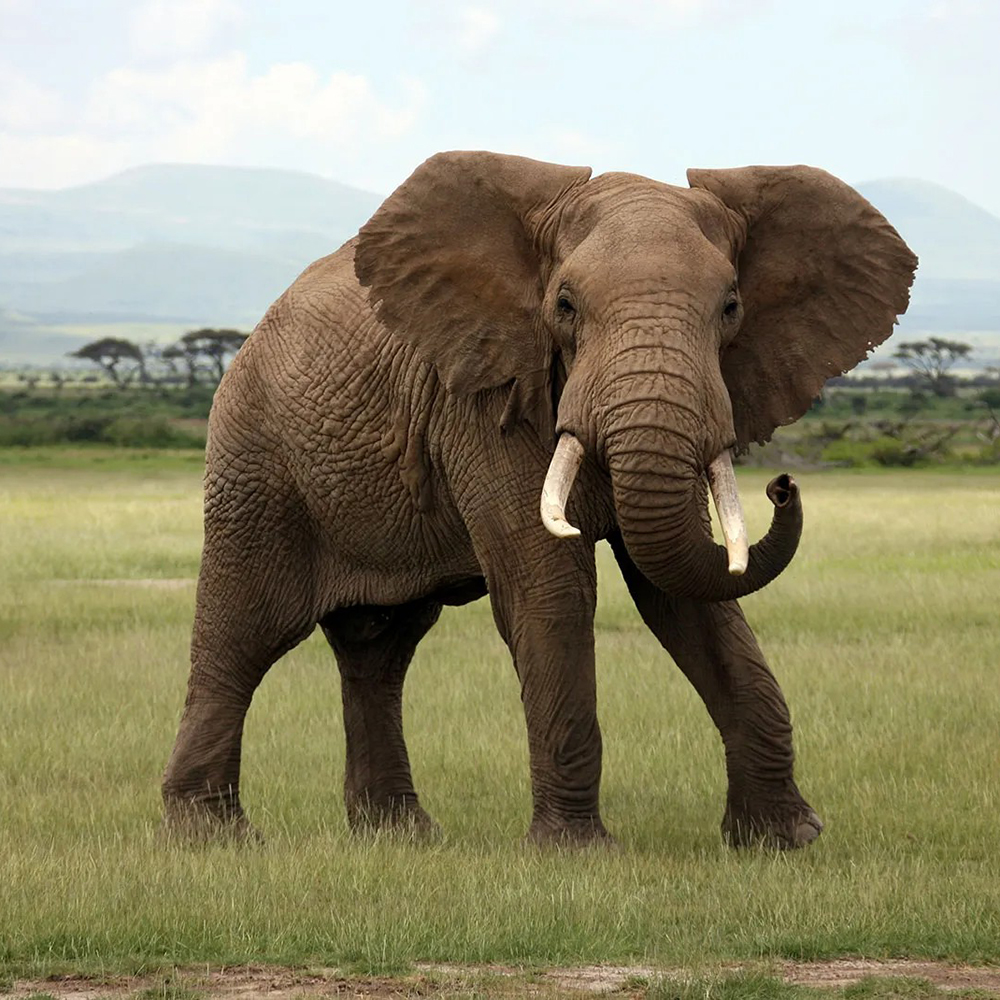
The most distinctive features of the African elephant are its large, fan-shaped ears, robust limbs, heavy body, and prominent tusks. Its skin is covered in wrinkles, especially concentrated on the forehead, trunk, ear edges, and legs. Compared to Asian elephants, African elephants have larger ears, typically higher shoulders, and two flexible, finger-like projections at the tip of their trunks.
What Does It Mean When an Elephant’s Trunk Is Up?
When a real elephant raises its trunk, it may be to sniff the air, sense its surroundings, make sounds, or communicate with its companions. Therefore, raising the trunk is not a single behavior, but rather part of an elephant’s natural instincts.
- Sniffing the Air with the Trunk Raised
An elephant’s nostrils are located at the tip of its trunk. When it smells an unfamiliar scent from afar, or hears a sound but cannot pinpoint its source, it often stops, extends its trunk into the air, and slowly rotates the tip in different directions. This action is sometimes called “periscope sniffing” because the raised trunk resembles a periscope probing its surroundings.
- Alertness and Environmental Assessment
When an elephant detects an unfamiliar animal, person, or sound, it may also quickly raise its trunk. At this time, raising the trunk is still for smelling, but its physical state may have shifted from normal observation to alertness.
An alert elephant often pauses walking, raises its head, keeps its body still, and points its trunk in the direction from which the scent or sound may be coming. It may also open its ears to hear surrounding sounds and to appear larger.
- Social Greetings and Group Reunions
Elephants may raise their trunks when meeting companions, reuniting with family members, or engaging in social contact. During reunions, elephants may quickly approach each other, making rumbling noises, screams, or calls, while extending their trunks towards each other’s mouths, faces, temporal glands, or other parts of their bodies. Some elephants may also intertwine their trunks or place their trunks near each other’s mouths.
- Baby Elephants Learning to Use Their Trunks
Baby elephants are not immediately proficient in controlling their trunks after birth and need continuous practice as they grow.
They may curl their trunks, lift them high, drag them on the ground, or let their trunks swing with their bodies while running. Baby elephants will also try to use their trunks to touch objects, grasp food, and drink water, but early movements are usually not very accurate.
Therefore, baby elephants sometimes raise their trunks without a clear purpose, but rather to explore their bodies, practice trunk control, or in a state of excitement and play.
- Spraying Water
Elephants will also use their trunks to suck in water, then lift their trunks to bring the water to their mouths. Elephants don’t directly suck water into their stomachs through their trunks; instead, they temporarily store the water in their trunks before spraying it into their mouths.
When bathing, elephants also spray the water they inhale onto their heads, backs, or companions. Similarly, they use their trunks to scoop up mud or sand and toss it onto their bodies to help protect their skin and reduce insect bites.
- Eating and Reaching High Plants
When branches, leaves, or fruit are high up, elephants extend their trunks upwards, grasp the branches with the tip of their trunks, and pull the food to their mouths. The end of the trunk has flexible, finger-like projections that can grasp leaves, fruit, and small plants.
In general, the most common function of an elephant raising its trunk is to perceive and manipulate its surroundings. In sculptures, an elephant with its trunk raised is often associated with good luck, strength, and positivity, while in nature, this posture reflects the elephant’s keen sense of smell, complex social behavior, and the powerful practical function of its trunk.
In decorative arts, an elephant with its trunk raised often symbolizes strength, vitality, welcome, and good fortune. The upward-stretching trunk adds dynamism to the overall design and is often interpreted as a symbol of positivity, gathering good fortune, and welcoming good things.
Detailed Design of the Bronze Elephant Sculpture
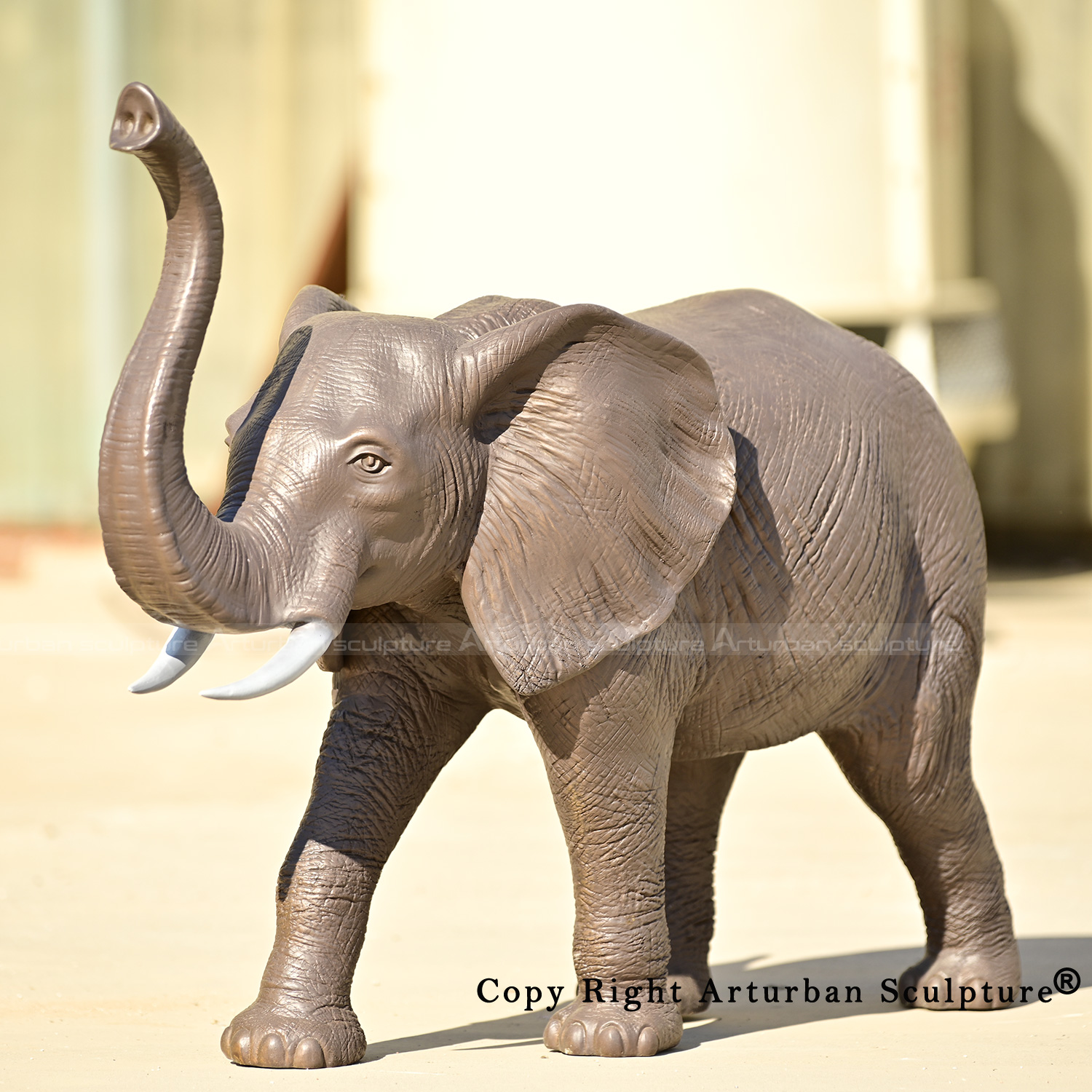
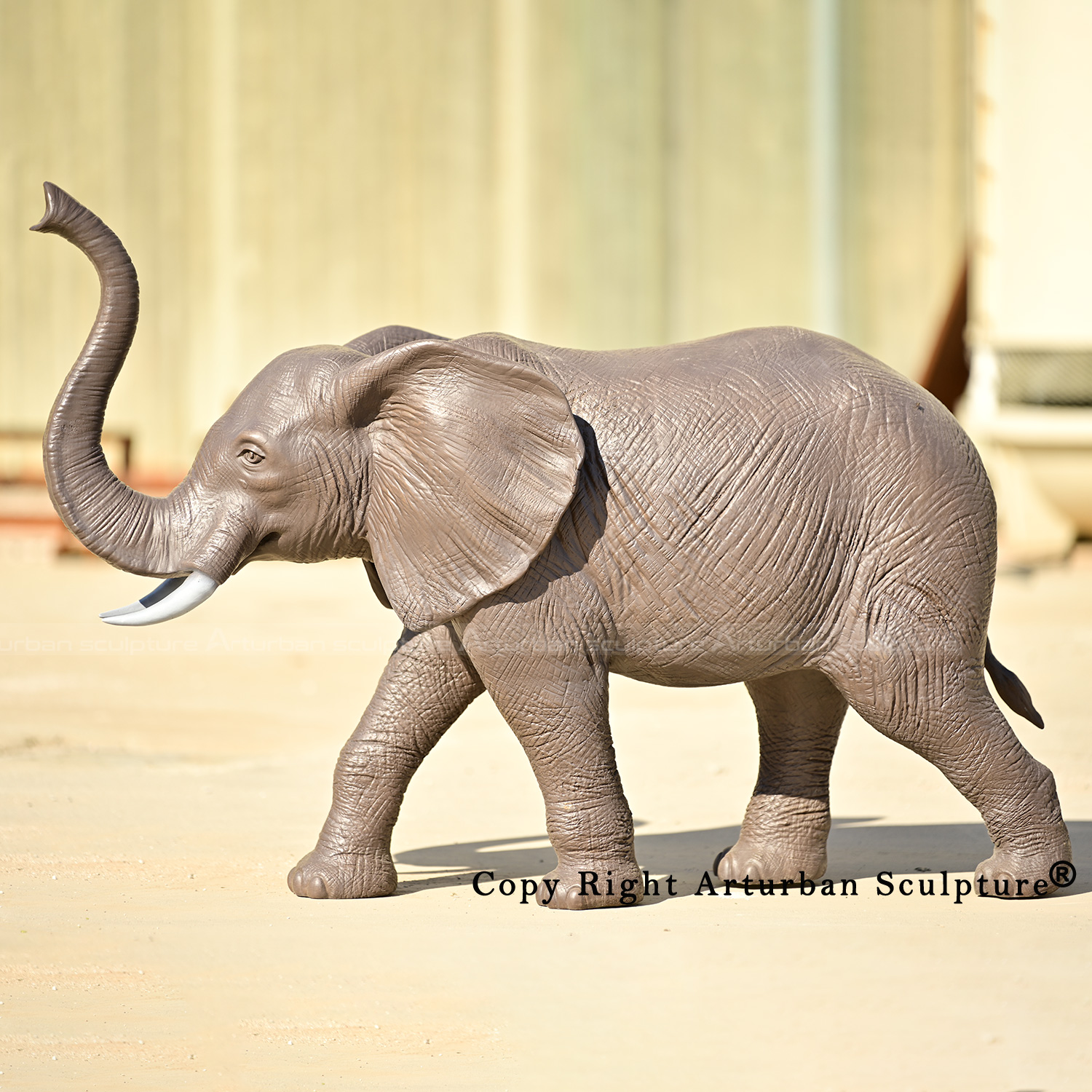
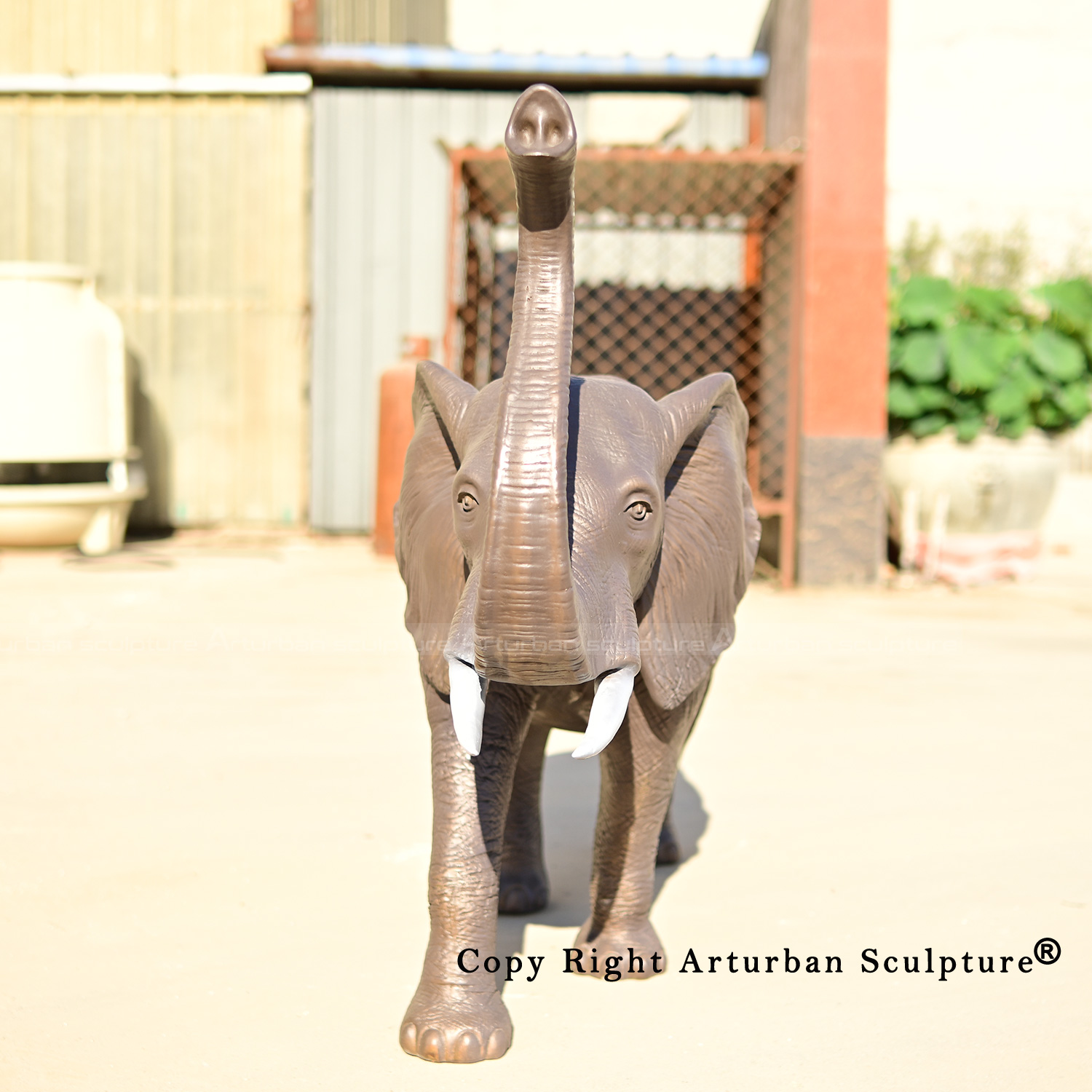
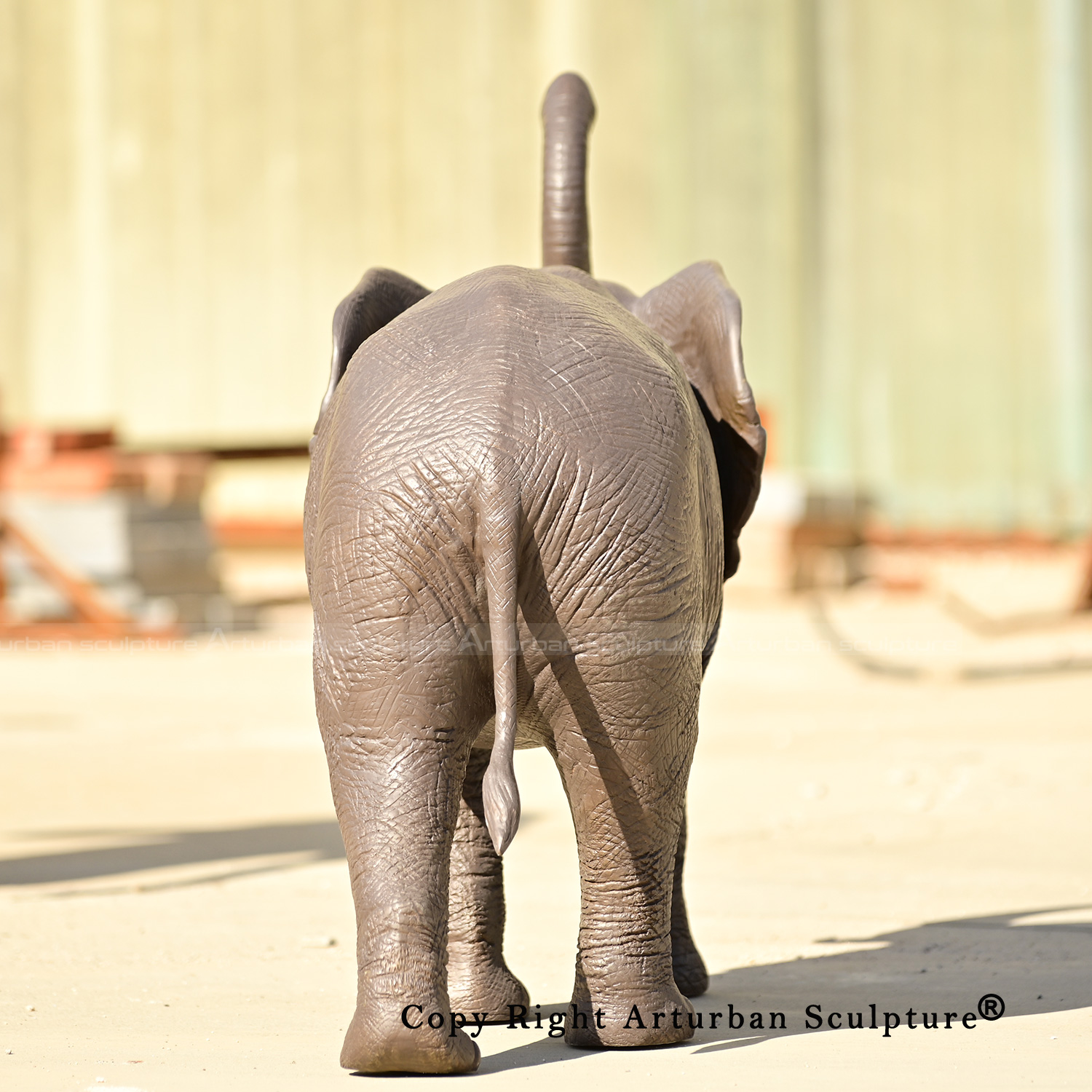
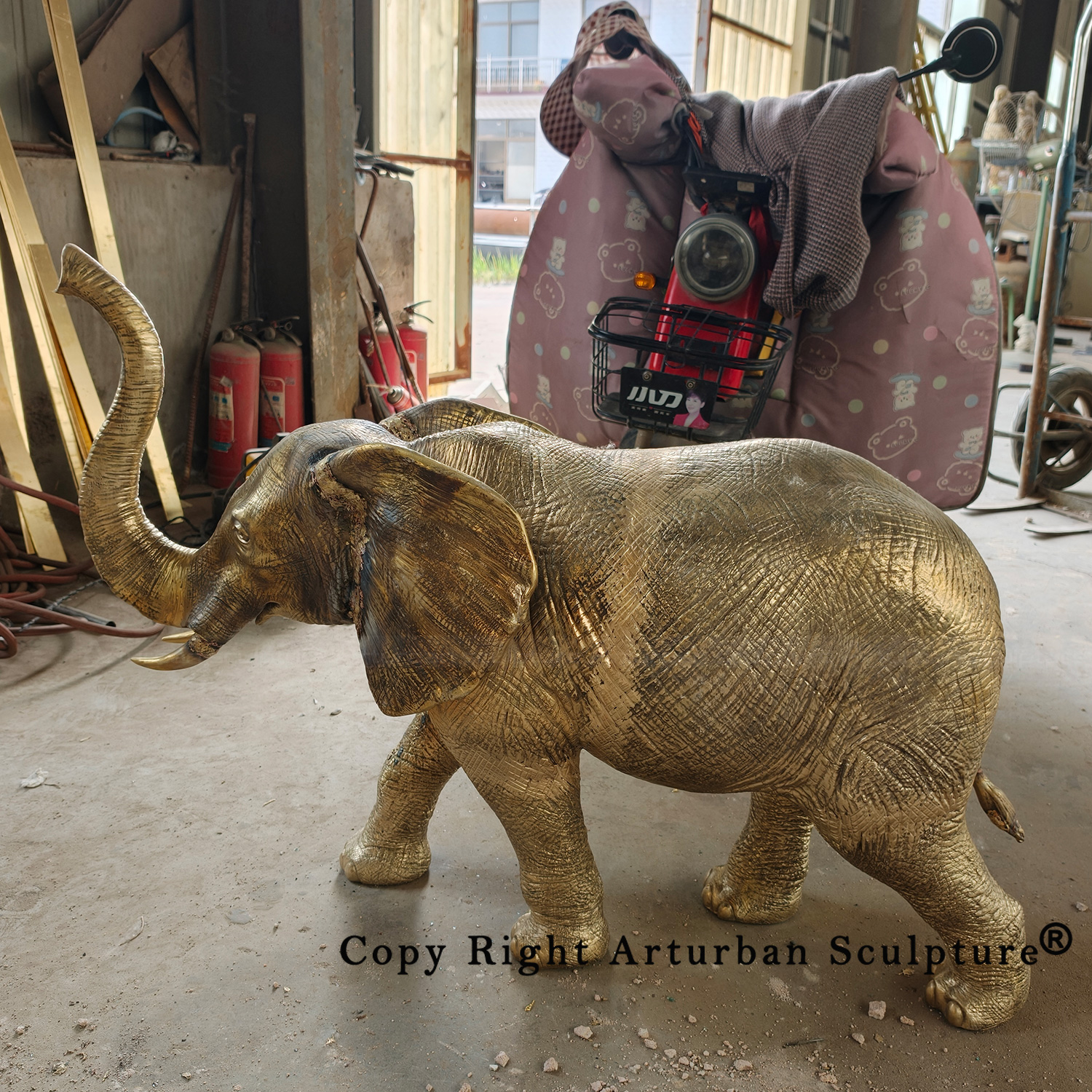
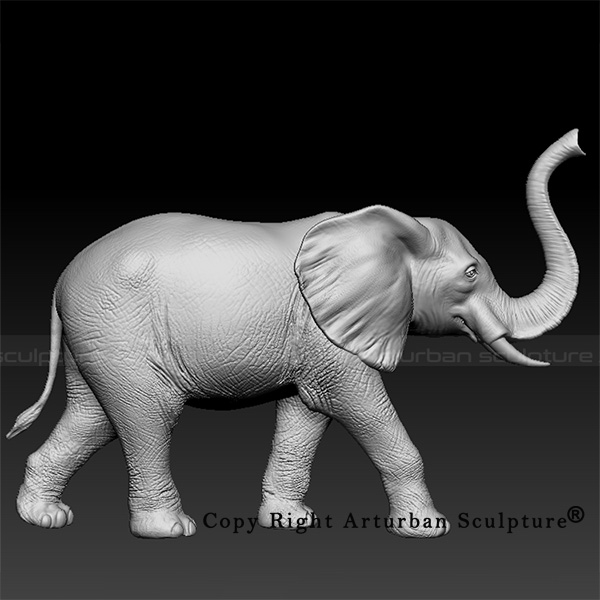
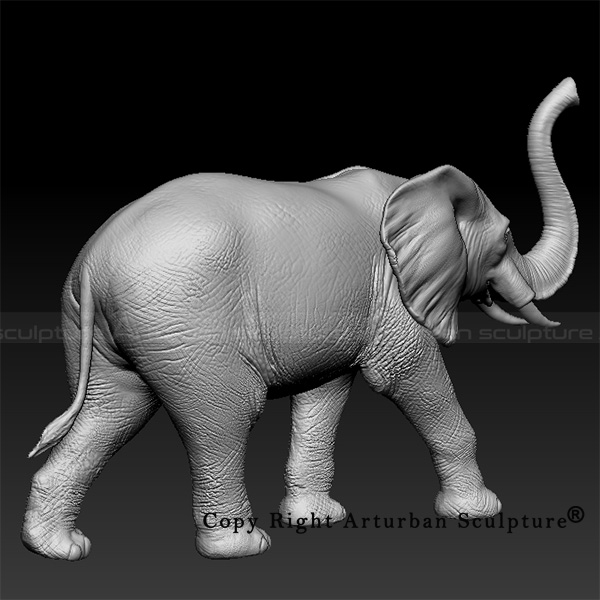
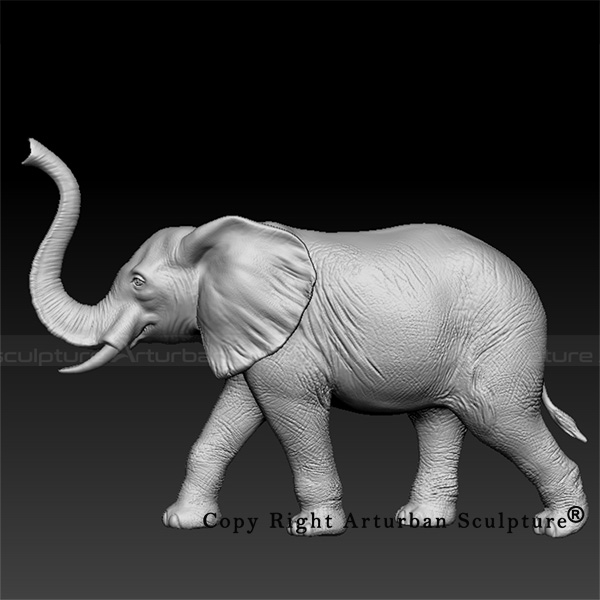
This large elephant sculpture is modeled after an adult African elephant, depicting it in a slow, forward-moving posture. Its limbs are staggered, strong and powerful, conveying a stable center of gravity and the dynamic movement of a steady gait. The large ears spread out to the sides with naturally undulating edges. The long trunk extends forward from the face and curls high, creating a clear sense of layering with the two forward-curving tusks. The surface of the Elephant with Trunk Up Statue is meticulously detailed, depicting the skin folds on the forehead, trunk, ear edges, abdomen, and legs, giving the bronze a textured feel close to real elephant hide. Details such as the eyes, toes, and tail are well-executed, resulting in an overall form that combines realism with decorative appeal.
Why We Use Bronze for This Elephant Statue
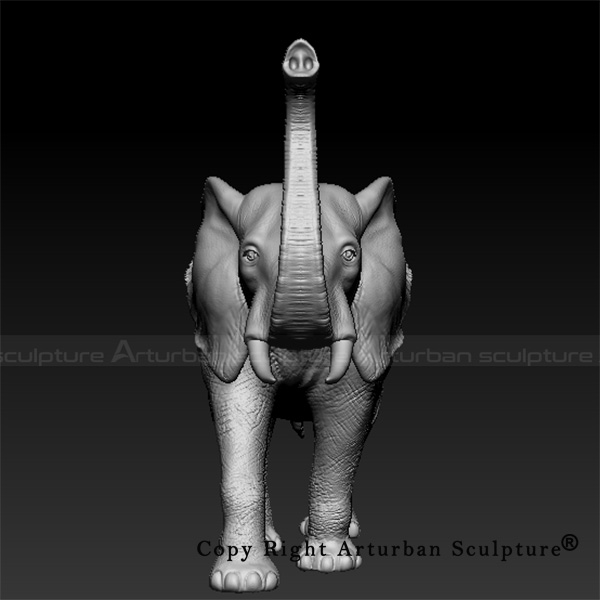
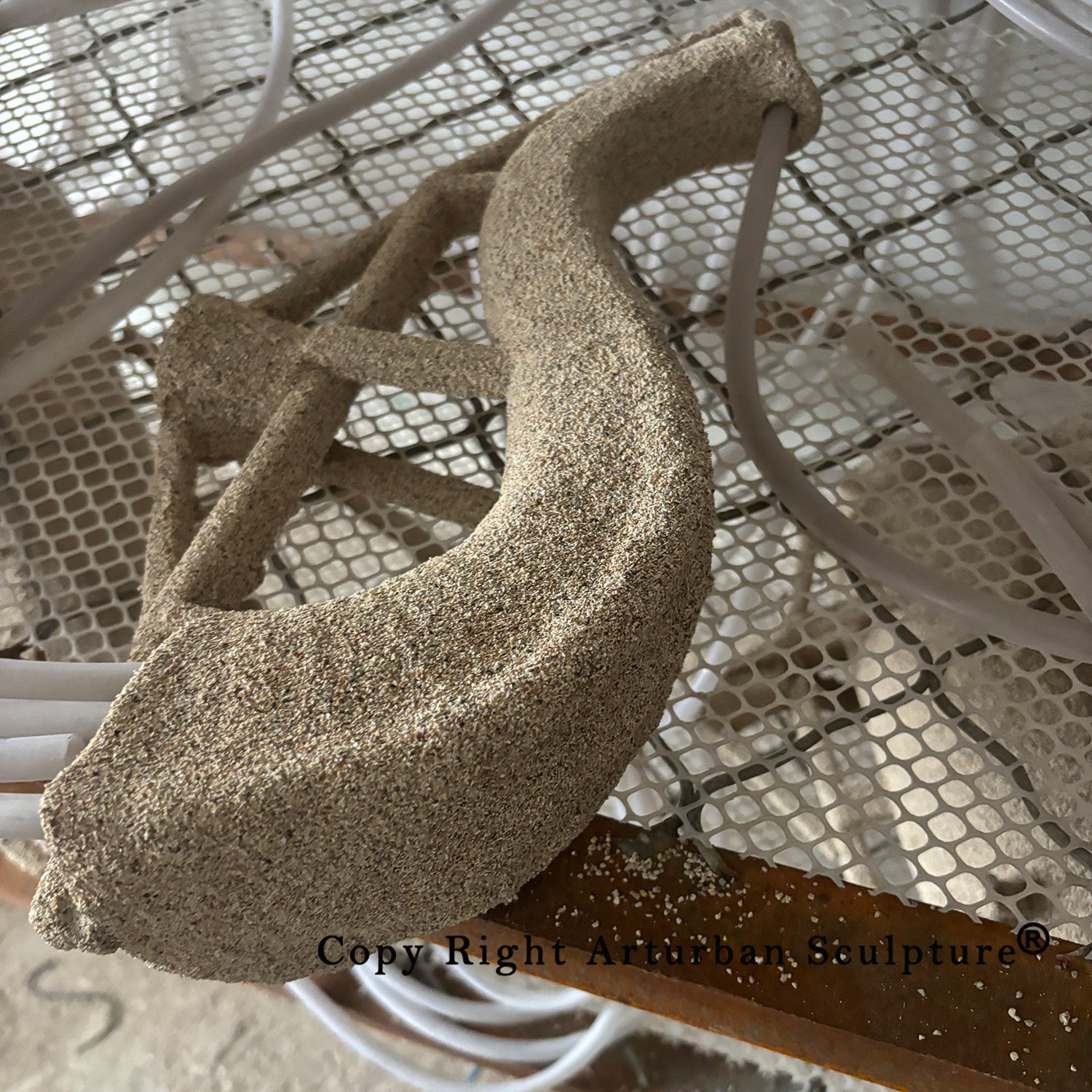
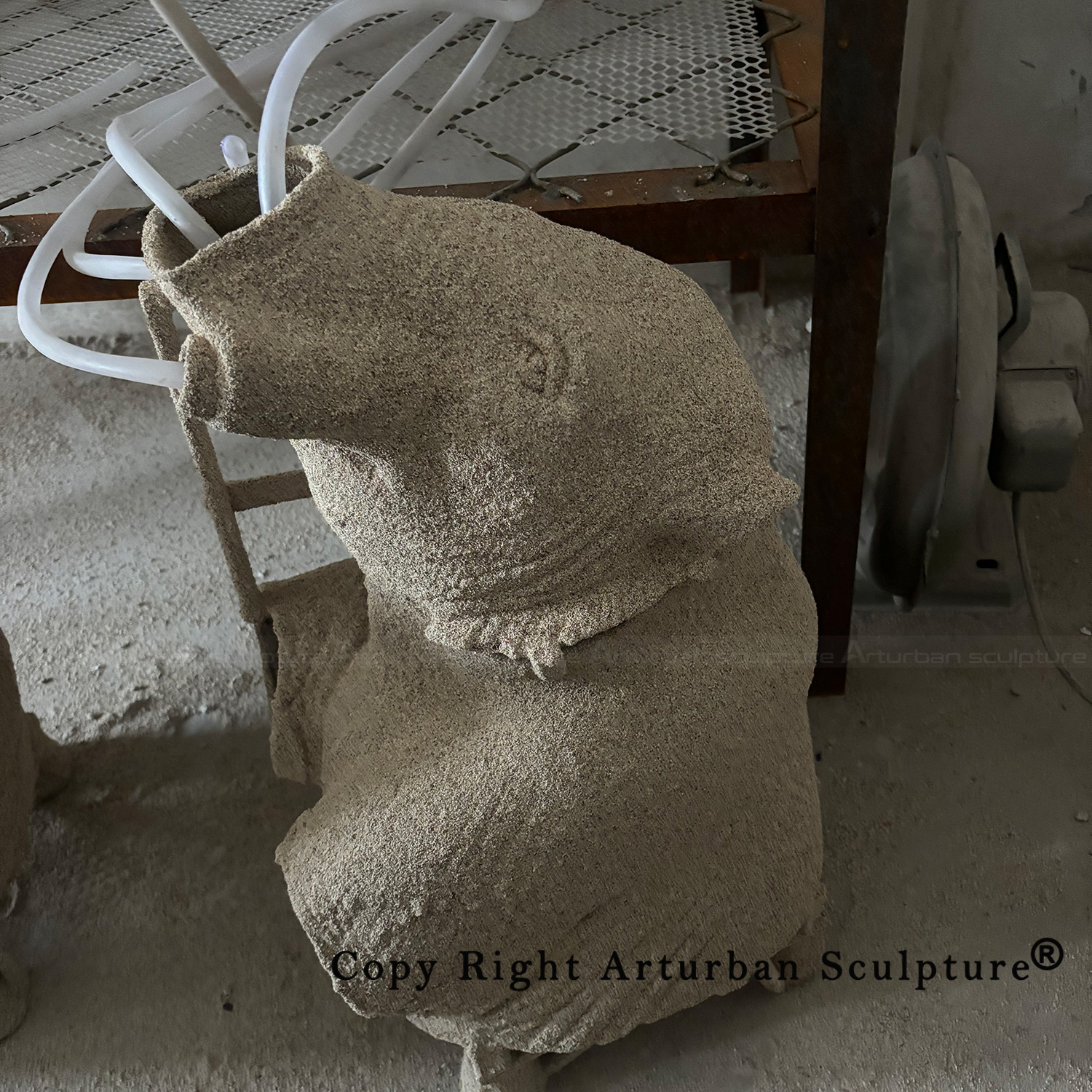
Bronze is an ideal material for depicting the complex and delicate features of elephants. The lost-wax casting process preserves details such as the trunk, ears, tusks, and skin wrinkles relatively intact, giving the Elephant with Trunk Up Statue a strong sense of realism while maintaining a sense of weight. Bronze sculptures also possess good structural stability and outdoor adaptability, making them suitable for long-term installation in courtyards, hotel entrances, commercial plazas, or theme parks.
Furthermore, the bronze surface can be finished with dark brown, gray-brown, antique, or green patina effects according to project requirements. Large sculptures can also be equipped with internal metal support structures to enhance overall strength and installation stability.
How Our Factory Made This Elephant Statue
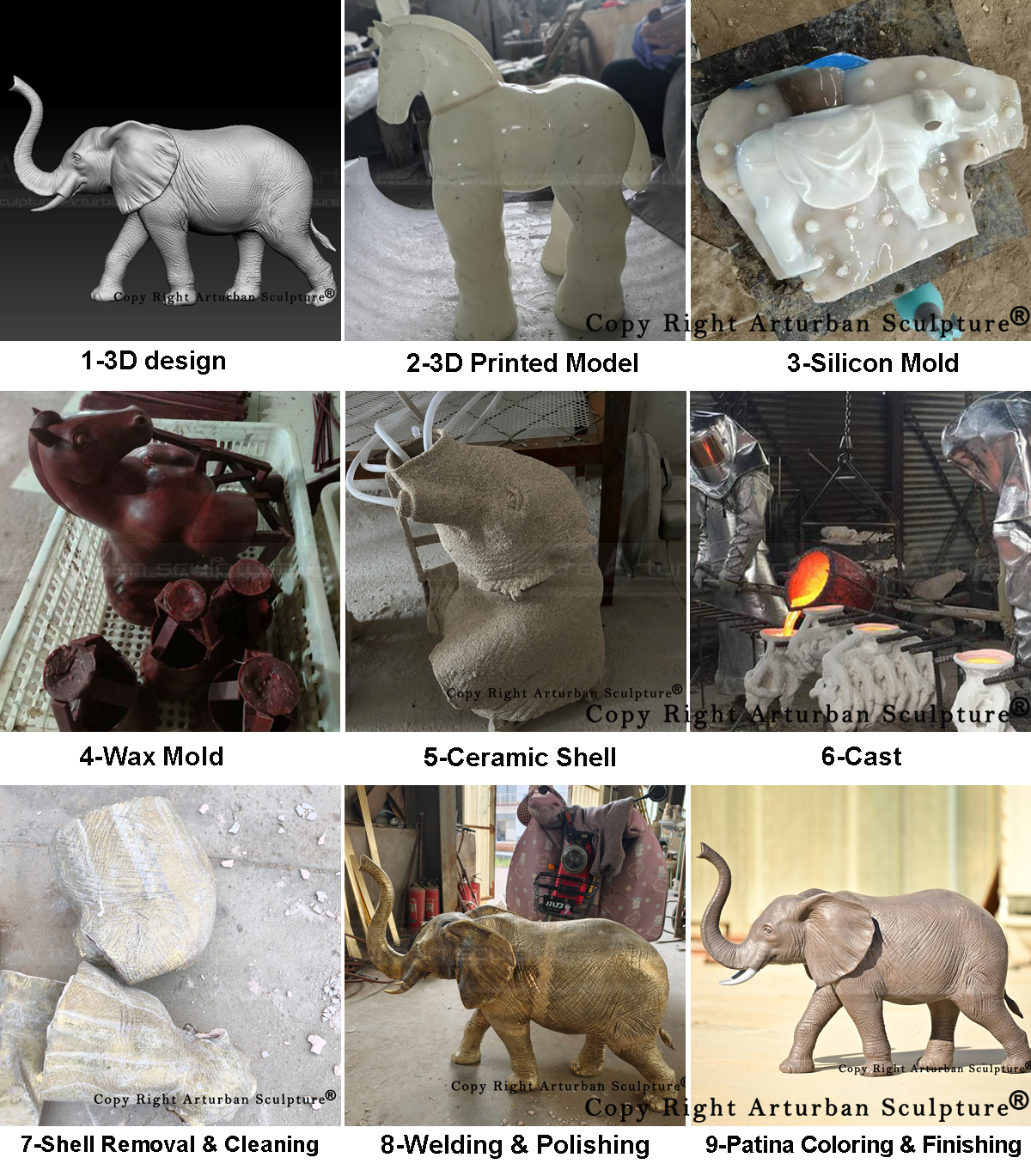
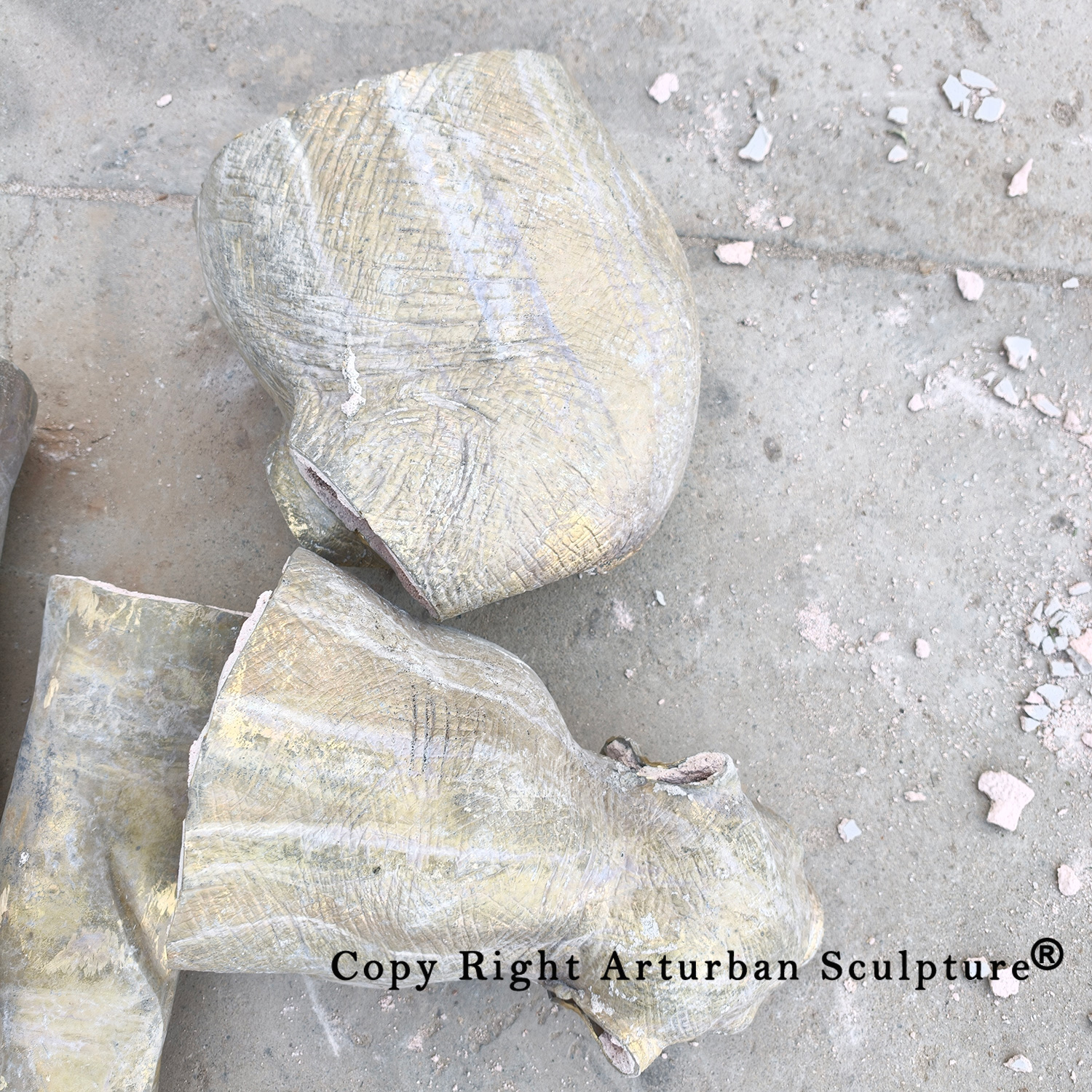
This bronze elephant sculpture was meticulously crafted by a team of artisans through processes including 3D design, model making, silicone molding, wax model making, ceramic shell casting, molten bronze casting, welding, polishing, and surface coloring.
Custom Options for Your Elephant Sculpture
Arturban Sculpture Manufactory supports customized elephant sculptures of various types to meet project requirements:
- Size Customization: Sizes can be customized to fit the installation environment, ranging from small patio pieces to large-scale landscape sculptures approaching life-size.
- Material Options: In addition to bronze, we offer a variety of materials including fiberglass, marble, and stainless steel to meet different budgets and design styles.
- Pose & Design Customization: The elephant’s pose can be adjusted, including trunk direction, standing or walking posture, tusk length, ear shape, etc., and can also be customized based on images, sketches, or 3D files.
- Surface Finish Customization: Different surface finishes can be customized, such as antique bronze, dark brown, taupe, or other specified colors to match different landscape environments.
- Scene & Function Customization: We can design single elephants, mother and baby elephants, or herds of elephants to suit different usage scenarios, and can also create elephant fountain sculptures integrated with water features.
With comprehensive design and production capabilities, we provide customized services from concept design to finished product production, meeting the needs of hotels, courtyards, commercial spaces, theme parks, and public art projects.
Where Can an Elephant with Trunk Up Statue Be Installed?
This sculpture boasts strong visual recognition and is suitable for various outdoor and public spaces:
- Hotel & Resort Entrances: The elephant’s upward-pointing trunk pose conveys a welcoming feel, making it a distinctive landscape sculpture at the entrance of hotels and resorts, enhancing the artistic atmosphere of the space.
- Private Gardens & Estates: Elephant with Trunk Up Statue is suitable for placement in villa courtyards, garden lawns, and along courtyard paths, serving as a decorative focal point in natural landscapes.
- Commercial Plazas & Shopping Centers: The large bronze elephant sculpture is easily recognizable from a distance and can be used in commercial plazas, shopping centers, or public leisure areas to create a unique spatial landmark.
- Zoos & Wildlife Parks: The realistic elephant shape blends seamlessly into animal-themed environments, making it suitable for zoos, wildlife parks, or educational display areas.
- Theme Parks & Public Art Spaces: The elephant image possesses approachability and cultural symbolism, making it suitable as part of theme parks, art districts, or urban public landscapes.
- Fountain & Water Features: The upward-pointing trunk design is also suitable for incorporating water features, with the trunk designed as a water outlet to create an interactive elephant fountain sculpture.
Depending on the installation location, space size, and viewing distance, we can customize elephant sculptures of different sizes and materials to ensure they harmonize with the surrounding architecture and landscape.
How to Install and Maintain an Outdoor Bronze Elephant Statue?
- Installation Preparation: Before installation, the foundation structure needs to be designed based on the sculpture’s size, weight, and placement environment. Large bronze sculptures typically require a pre-fabricated concrete foundation, secured with embedded parts, steel structures, or bolts to ensure long-term stability.
- Transportation & Assembly: Large elephant sculptures are usually manufactured and transported in parts, then assembled on-site. During installation, special attention should be paid to protecting protruding parts such as the trunk, tusks, and ears, and the firmness of all connections should be checked.
- Daily Cleaning: Dust, leaves, bird droppings, etc., from the outdoor environment may adhere to the sculpture’s surface. Regular cleaning with a soft cloth or clean water is recommended. Avoid using corrosive cleaning agents such as strong acids or alkalis.
- Surface Protection: The surface of bronze sculptures is usually treated with a protective coating to reduce the impact of environmental factors. The condition of the protective coating should be checked regularly according to local climate conditions, and maintenance should be performed as needed.
- Regular Inspection: Regular inspection of the sculpture’s base fixing structure, welded areas, and surface details is recommended, especially in high humidity, coastal, or extreme weather environments, to ensure the sculpture’s long-term safe display.
With proper installation and maintenance, bronze elephant statues can be used in courtyards, hotels, commercial spaces, and public landscapes for a long time, maintaining a stable structure and good artistic effect.
Frequently Asked Questions
- What does an elephant with its trunk up symbolize?
Elephants with their trunks pointing upwards are often seen in decorative arts as a symbol of strength, vitality, welcome, and a positive spirit.
- Is this elephant sculpture based on an African elephant?
Yes, this sculpture is primarily based on the physical characteristics of an adult African elephant. Its large ears, prominent tusks, robust body structure, and rough skin texture all embody the typical features of an African elephant.
- Can the size of the elephant statue be customized?
Yes. We support customized sizes, from small backyard decorations to large landscape sculptures. The height, length, and overall proportions can be adjusted according to the installation space, viewing distance, and project requirements.
- Can the elephant’s trunk position be changed?
Yes. The trunk posture, tusk length, ear shape, and overall pose can all be adjusted according to client needs, or customized based on images, sketches, or design plans.
- What materials can be used to make an elephant sculpture?
In addition to bronze, we also offer fiberglass, marble, and stainless steel options. Different materials are suitable for different scenarios. For example, bronze sculptures are suitable for long-term outdoor displays, fiberglass is suitable for lightweight display projects, marble is suitable for classic landscape environments, and stainless steel is suitable for modern space designs.
- Is a bronze elephant statue suitable for outdoor use?
Yes. Bronze is a stable material suitable for outdoor environments such as courtyards, hotel entrances, commercial plazas, and parks. Professional surface treatment enhances the sculpture’s adaptability to various climatic conditions.
- How is a custom bronze elephant statue made?
Bronze sculptures typically undergo steps including design confirmation, 3D modeling, wax model making, ceramic shell making, lost-wax casting, welding and assembly, detail repair, surface coloring, and quality inspection.
- Can you make a custom elephant sculpture based on my design?
Yes. We support customization based on customer-provided images, sketches, 3D files, or design schemes, and can adjust the size, shape, material, and surface finish according to the installation environment.
- Can the elephant statue be made as a fountain?
Yes. The elephant’s trunk-upward structure is suitable for integration with water feature designs, and the trunk can be designed as a water outlet to create a landscape-functional elephant fountain sculpture.
- How can I get a quotation for a custom elephant statue?
Simply tell us your ideas or provide reference images, and our design team will assist in confirming the size, material, and production plan, and provide a suitable quotation.